Back in your school daze, the science club and the orchestra kids might have worked opposite ends of the school hallway. But we met someone who belonged to both cliques as a kid, and grew up to have careers in both disciplines.
Mark Branch is an aerospace engineer at NASA’s Goddard Space Flight Center in Maryland. He showed us around the facilities he supervises in the electromagnetic test section, where he prepares instruments and satellites for launch into outer space.
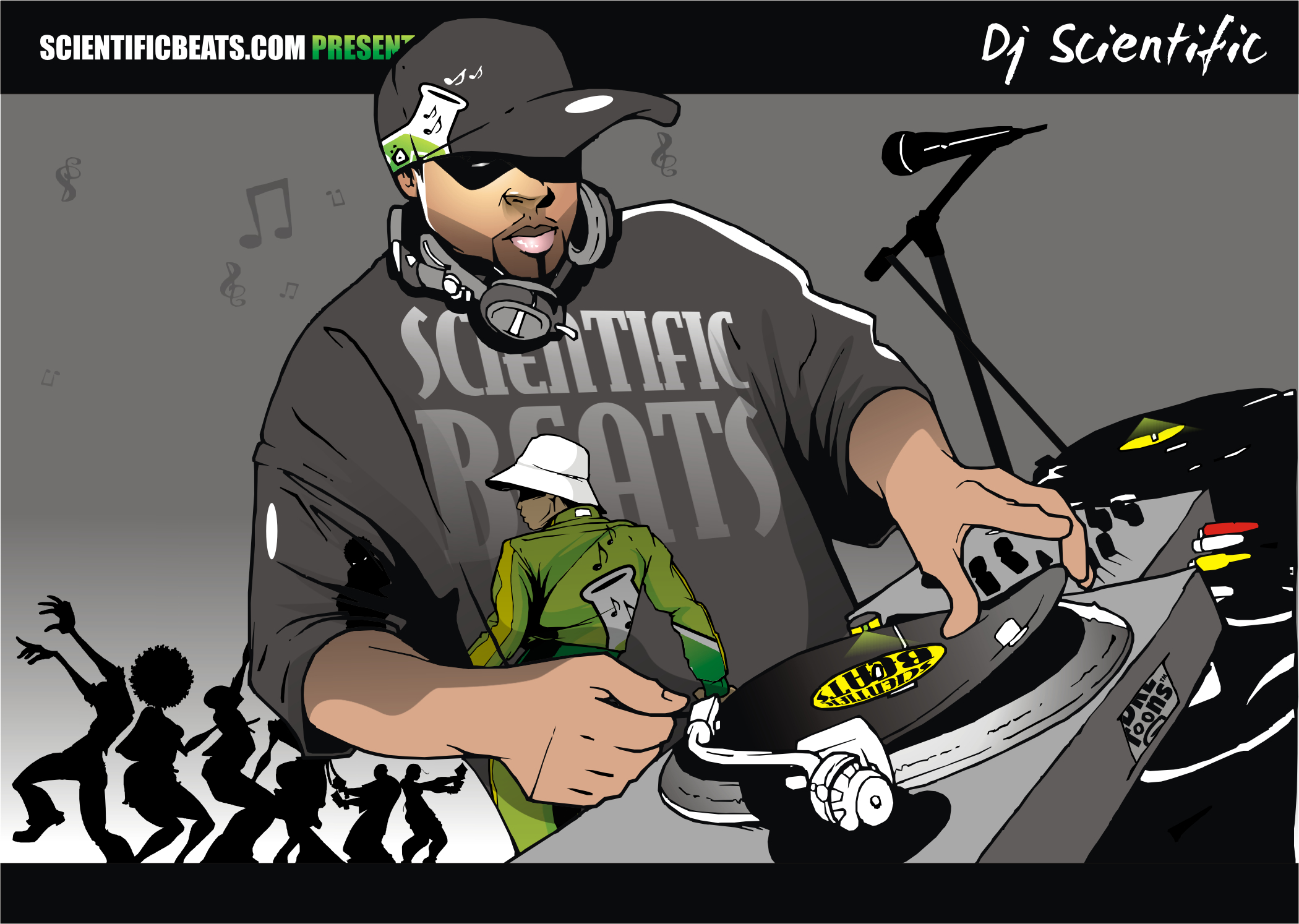
But as DJ Scientific, Mark is also one of the most sought after nightclub DJ’s on the DC circuit, and he’s moving into producing hip hop music in his own studio.
I produced a quick profile of Mark for PRI’s Studio 360, the arts and culture show on public radio.
Listen here:
Now you know, we are great admirers of our friend Elan Vytal, who also goes by the name of DJ Scientific. I’m not sure who started using the handle first, but wouldn’t it be great if we could get these two to make some noise in the same room?
Ever have one of those days when nothing coming out of your mouth makes any sense?
THIS is sort of what it’s like when that happens to me, although it doesn’t sound half as funny or cool:
This project is called Speakatron, created by interactive designer Marek Bereza for one of this year’s Music Hack Day events. In general, Music Hack Days happen over a weekend in a number of different cities. Musicians, coders and programmers get together to try and build the next generation of music applications, whether it’s software, apps for mobile devices or new ways of creating art for the web.
On the project Wiki, Bereza describes Speakatron as, “A program that looks at you through your web cam and plays a sound when you open your mouth. It can tell what shape you’re making and how high your mouth is on the screen as synthesis parameters.”
I haven’t downloaded it yet, but if you’d like to play around with the program or the source code, you can pull it down from Bereza’s project page. At the moment, the program offers the sounds of a cat, a synth, birdsong and Buddhist monks. I would love to add the wah-wah trombone sound of the teachers on the old Peanuts cartoons.
As cool and desirable a device as the iPad is, THIS whole business here…
…is cute if you want to entertain your friends on beer night. It’s hilarious when compared to something like THIS, for instance:
…OR, say, something like this:
BUT, watching a “brand storyteller” stab at a touch screen in front of a bemused bar crowd on cable TV, is NOT as thrilling or aspirational as a REAL turntable artist combining software technology and fierce deck technique in front of a happy, bouncing crowd. So much hard-sell yapping (buy TWO iPads and YOU can be a DJ!) and not much demo.
We wish the app makers had gone straight to some established beat jugglers and musicians to show off the iPad’s potential as a musical tool, instead of concocting this viral campaign. It would have said a lot more about their products.
"Brand Storyteller" Rana June
As one online commenter said, this was meant to be a “WOW” but turned into a “LOL” instead.
In these photos from June 15: Composers Dan Cooper, Gene Pritsker, Joseph Pehrson, Kamala Sankaram & Patrick Grant with performers Kathleen Supove, Marija Ilic and Lynn Bechtold. Drummer/percussionist John Ferrari will join in beginning rehearsal No. 2.
Lonely Ride Coney Island – Patrick Grant Prudendurance Wet – Joseph Pehrson Wading for Bait Man – Patrick Grant Water Possessed 4- Gene Pritsker Sounds of Sirens – Patrick Grant Lucid Intervals – Patrick Grant Deep Time 2- Gene Pritsker Solstice Bells – Dan Cooper Pilgrim – Kamala Sankaram Fishbowl – Dan Cooper Design – Dan Cooper
She’s come a long way from glee club. Arriving in New York City hoping to one day tread the boards on Broadway, composer/performer/accordionista Kamala Sankaram instead discovered Philip Glass and Steve Reich, and then developed into an eclectic and theatrical new music composer.
Composer/performer Patrick Grant sat down to chat with Kamala Sanakaram about her musical roots and her current work in this video:
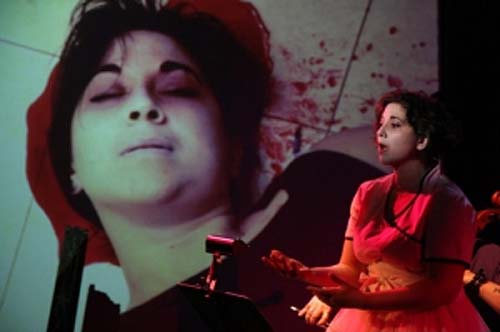
Kamala created the music for the multimedia musical, Sounding at HERE Arts Center, based on Henrik Ibsen’s The Lady from the Sea. Her melodic rock compositions propelled audiences into the past memories and inner turmoil of a washed up rock star mourning the loss of a child. Kamala remains at HERE as an artist in residence, where she is working on a multimedia chamber opera called Miranda: “Pop-opera meets Reality TV…where the audience becomes detective, judge, and jury for an unsolved murder. An innovative mix of original music inspired by hip-hop, tango, Baroque counterpoint, and Hindustani classical ragas, Miranda is set during the live taping of a hit Court TV show.”
We’re so pleased that Kamala Sankaram is joining us for H2Opus, Fluid Soundscapes by Multiple Composers, an event produced by Patrick Grant & Special Guests for Make Music New York 2010. This special free outdoor performance takes place at Waterside Plaza NYC, 23rd Street & The East River, Monday, June 21, 2010, 7PM – 9PM.
This time on the MMiXdown, Elan Vytal aka DJ Scientific takes some time out to tell us about TTM (Turntablist Transcription Method), a system of notating and arranging DJ sampling, scratching and effects. But instead of notes on a staff, the marks show samples, where to backspin or when your mix fader needs to come up or down in a particular measure.
Elan has been using TTM in his collaborative work with live musicians, especially string quartets, and documents his compositions with TTM. As he describes it, TTM has helped him share his technique with musicians looking to expand the sonic vocabulary of their instruments, by showing them how to mimic the DJ’s physical moves and rhythms in their own playing. He also finds it useful when teaching a younger generation to use turntables for the first time.
Developed in 2006, TTM was founded by film-maker John Carluccio in collaboration with a wide community of renowned DJs and turntablists, including Rob Swift, Qbert,Babu and Apollo; industrial designer Ethan Boden; and DJ Raedawn, who had been independently developing a transcription method for complex scratching and combined his efforts with John and Ethan. In the late nineties, John Carluccio created the documentary,Battlesounds, which documented the rise of the hip-hop scratch DJ, and the grassroots community of turnablists working to develop the art form.
On TTM’s web-page you can find tutorials, audio demos, sample notations and tips from renowned turntablists, opening up DJ technique to other disciplines and applications. As Elan says, these sounds won’t be limited to just dance clubs and party circuits. “Hopefully future DJ’s can take what I’m doing to the next level and beyond.”
Last week, we heard that Joshua Fried of Radio Wonderland was stuck in Europe, waiting for the Icelandic volcanic spew to slow down long enough to get a plane back to the US. He’d been doing Wonderland shows in Italy when the ash cloud began to wreak havoc with the air travel.
I’m not sure when Joshua gets back, but as a shout-out for him to make it home safe and sound, we want to share video from Radio Wonderland’s set during the MMiX Festival last fall.
And if you can’t figure out what in the world Joshua is doing in that clip, listen here to what he has to say about the Radio Wonderland mission:
Video from the MMiX Festival of Interactive Music Technology Oct. 8-11, 2009, NYC
This year marks the 100th birthday of American classical composer Samuel Barber (March 9, 1910 – January 23, 1981). But his famous work for string quartet, Adagio for Strings, lives on as a pop meme. Last week, the New York Times published a lengthy article that discussed how Barber’s piece embedded itself in the mainstream culture via its use as a soundtrack for film, television and radio.
For instance, the Adagio plays prominently in the violent, heart-rending death scene of Sgt. Elias, Willem Dafoe’s character in the Oliver Stone film, Platoon:
The Adagio accompanies a steroid-fueled beating in a 2004 episode of the potty-mouthed cartoon, South Park. In recent years, the Adagio made a leap into the clubs, most notably with William Orbit‘s reworking of the piece, which transformed it into a bittersweet trance anthem. After all, the dance floor is where many a heart is broken…
I wanted to know what makes Barber’s Adagio tick, what it was in the music itself that made it the go-to soundtrack for all things sad and sorrowful, from the death of a US president (it was used on the radio to announce the passing of Franklin Delano Roosevelt), to the final moments of a tragic freak (David Lynch’s The Elephant Man).
So I asked composer Patrick Grant to break it down for me. In this audio clip, Patrick discusses the inner workings of the Adagio for Strings:
Since the Times article came out, I’ve been looking for a pop music equivalent of the Adagio for Strings, a song that signals a kind of solemn reflection or grief. I landed on “Breathe Me” by Sia. Ever since its appearance in the excruciatingly sad finale of the HBO series, “Six Feet Under”, Sia’s track has become a musical symbol for pensive melancholy in the media. With its reflective opening piano, its pinched vocals and its bursts of emotional strings, “Breathe Me” underscored montages of struggling athletes overcoming adversity during the 2010 Winter Olympics. I believe I’ve heard it running under promos and fan mash-ups of the especially soapy bits on shows like Grey’s Anatomy.
At the moment, “Breathe Me” is being used in a trailer for some movie featuring brooding adolescents in love and overwrought dialogue. Don’t ask me who’s in it or what happens, I just know it’s all going to be very emo because the music tells me so.
Sandwiched between all the flavors of electronic music in my tune bank, the iconic theme music for the BBC’s Doctor Who TV series never fails to pop up on ye olde iPod shuffle…
With that killer bass riff, the eerily majestic melody line and the sci-fi whooshes puncuating the piece, the music’s sonic vision of the future seemed so bleak and mysterious. Yet as dark-sounding as it was, there was also something dashing and whimsical about it, like Dr. Who himself.
Composed by Ron Grainer (The Prisoner, The Omega Man) and realized by Delia Derbyshire for the BBC Radiophonic Workshop in 1963, this was one of the first electronic themes created for a series. In my humble opinion, even after 40 years and several Dr. Who series reboots, it continues to be one of the most striking and recognizable electronic themes in TV history (another would be the gothic theremin melody from ABC’s Dark Shadows 1966-1971).
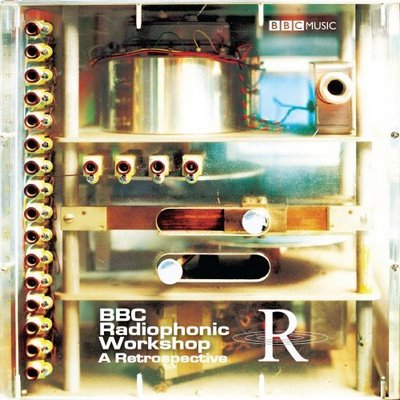
Active from 1958-1998, the BBC Radiophonic Workshop was originally commissioned to create sound effects for radio, but moved into soundscapes and music for television. But back in the 60s, there was no endless array of synthesizers and software sequencers that could easily produce new sounds. So the composers and audio technologists of the BBC Radiophonic workshop captured environmental sounds by hitting weird objects, speaking/breathing into mics, recording the strange noises of machinery. They composed music with tape loops and countless splices, stretching the tape, slowing it down, pitching it up. They found ingenious ways of manipulating open reel machines and playing with oscillators or circuits. They created so many unusual scores for BBC programing at the time, from educational programs to ID’s to dramatic series. It was music no one had ever heard before.
Among the members of the Radiophonic Workshop, it’s Delia Derbyshire in particular who’s been called the “unsung heroine of British electronic music” by the Guardian newspaper. Her genius for manipulating natural sound to make music has inspired a rabid cult following. The Dr. Who theme made her famous, but Delia composed astonishing scores for BBC television, theater and early electronic music performances. She was much admired for her enthusiasm, her intellect and her singular understanding of composition, mathematics and audio technology. Here is a video of Delia demonstrating some her technique:
In addition to her BBC work, there were extra-curricular collaborations with composers like Sir Peter Maxwell Davies or Roberto Gerhard, and passing creative dalliances with pop figures such as Anthony Newley, George Martin, and Harry Nilsson. She basically withdrew from music in the seventies, but in her later years, she began to get interested in electronic music again, when a younger generation of artists like Aphex Twin and The Chemical Brothers name-checked her as an influence. As noted in her obituary in the Guardian, “The technology she had left behind was finally catching up with her vision.” She passed away in 2001.
Here is one of Delia’s compositions called “Time to Go”, hosted by radio station WFMU:
Now, Delian fans old and new have another opportunity to find out more about their musical heroine and the BBC Radiophonic Workshop. Director Kara Blake profiles Delia in a new documentary film called “The Delian Mode”, which was screened at the Unsound Festival in NY last month.
“The Delian Mode” goes on to screenings in Glasgow, Montreal and London. But for a more complete overview of the work of all of the BBC Radiophonic engineers and composers, the BBC produced a 2006 documentary about the Workshop’s heyday, which you can find in several parts on YouTube:
Last week, The Unsound Festival kicked off in New York City, offering a full slate of concerts, multi-media performances, lectures, screenings, and other types of events in various venues around the city. Known for its eclectic range of electronic artists and genres, Unsound has traveled far from its Polish roots in Krakow for its inaugural week in the U.S.
The MMiXdown spoke with sound artist Kabir Carter, who will be moderating a festival panel on the role of sound in art at the Goethe-Institut Wyoming Building in the East Village this weekend.
Kabir Carter’s award-winning sound, performance, and installation work has been presented at 16Beaver, apexart, Bronx Museum of the Arts, Diapason, d.u.m.b.o. arts center, PS122 Gallery, Share, Socrates Sculpture Park, and The Stone in NYC, and he’s been a member of the analog sound synthesis ensemble Analogos since 2005. Carter has been an artist-in-residence at LMCC/Workspace: 120 Broadway, and Rensselaer Polytechnic Institute’s Create @ iEAR residency program, and he holds the Joseph Hartog Fellowship from Bard College.
Right here, you can listen to what Kabir has to say to us about the origins of the Unsound Festival, the challenge of defining and creating dialogue around the role of sound in art, and how he uses sound in his own work (14 min.):
The event Kabir Carter has organized for Unsound is called “Mapping Sound In Art: An Investigation”; it happens this Saturday, February 13 at 5:00pm and admission is free. He’s invited the following artists, curators and writers to join in the discussion:
Mapping Sound in Art, An Investigation
Saturday, Feb 13 at 5:00 pm, FREE
Goethe-Institut Wyoming Building
5 East 3rd Street (at Bowery)
New York, NY 10003







 The MMiXdown