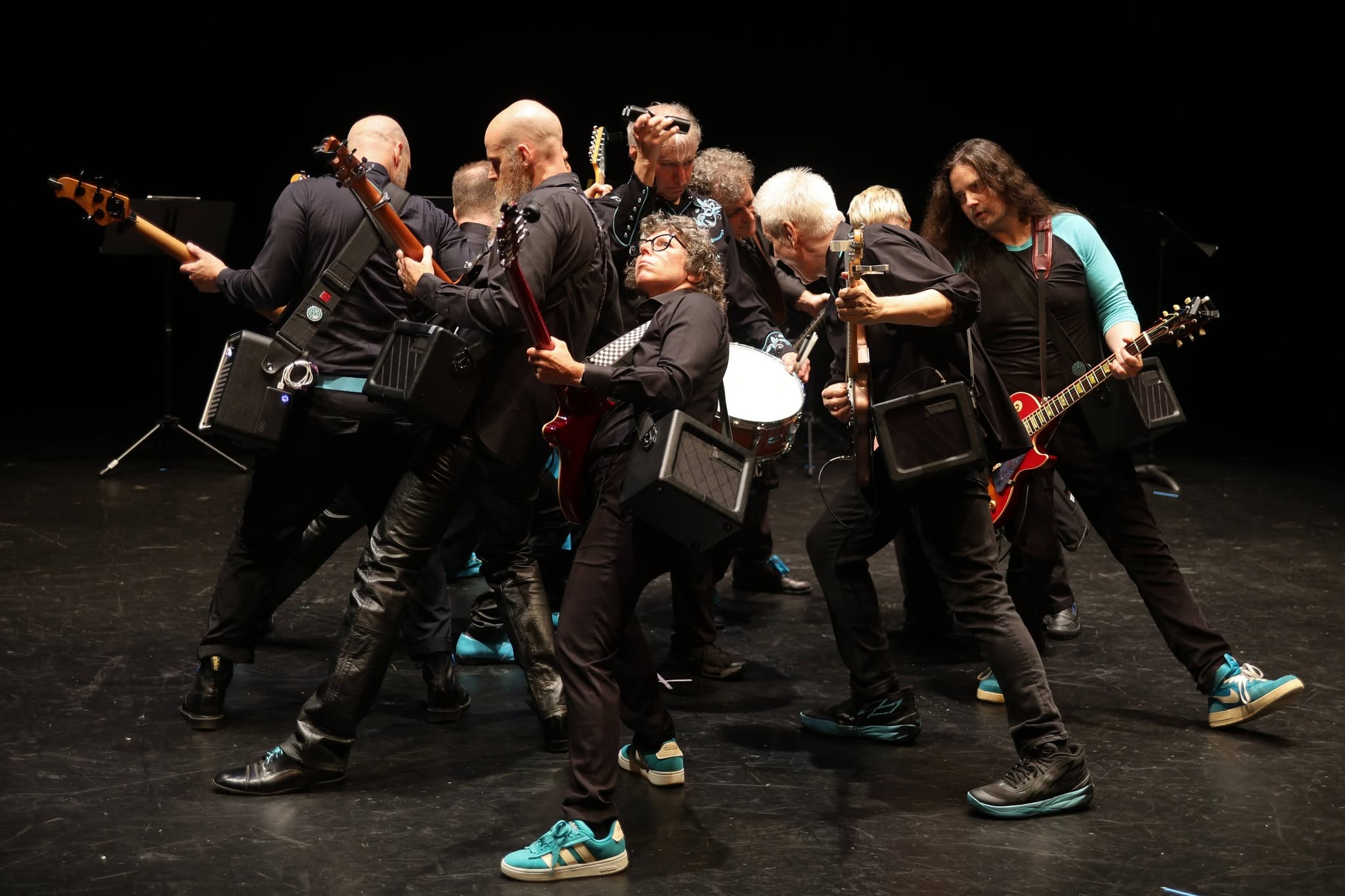
Reflections on our recent production at Theater for the New City, and the continuing evolution of music, movement, and experimental theater.
By Patrick Grant | October 2026
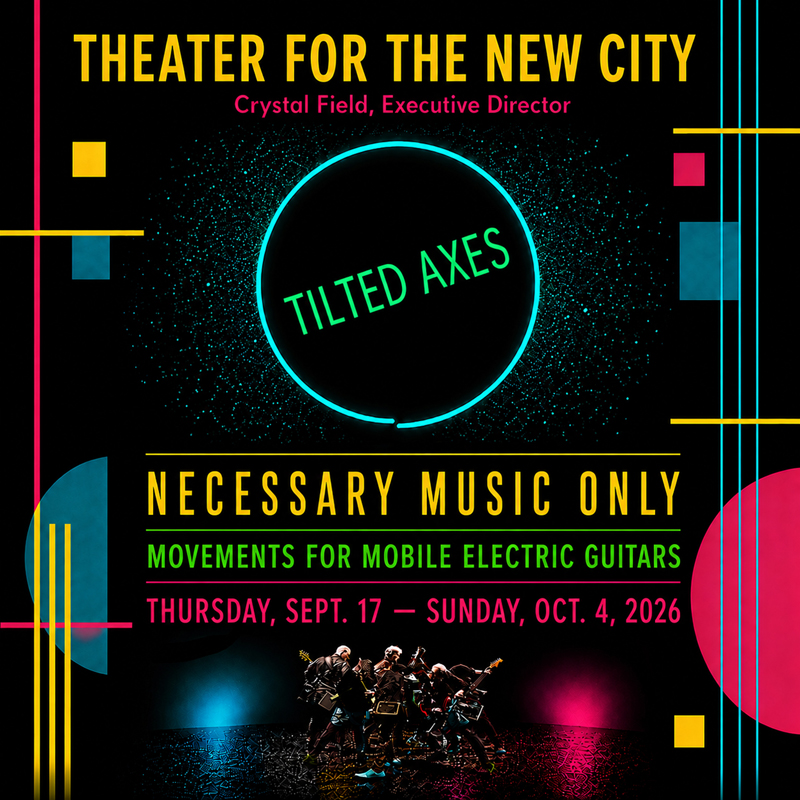
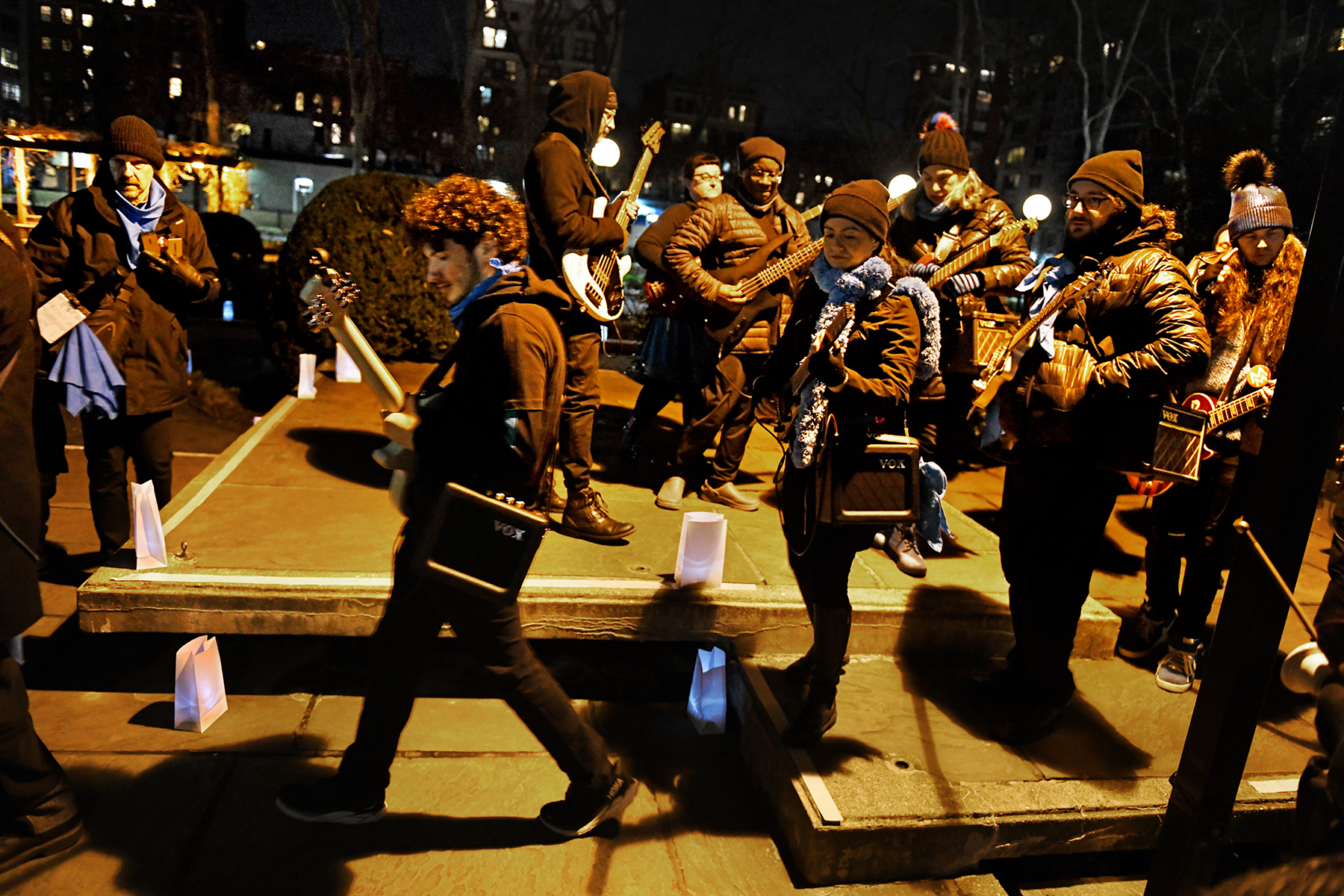
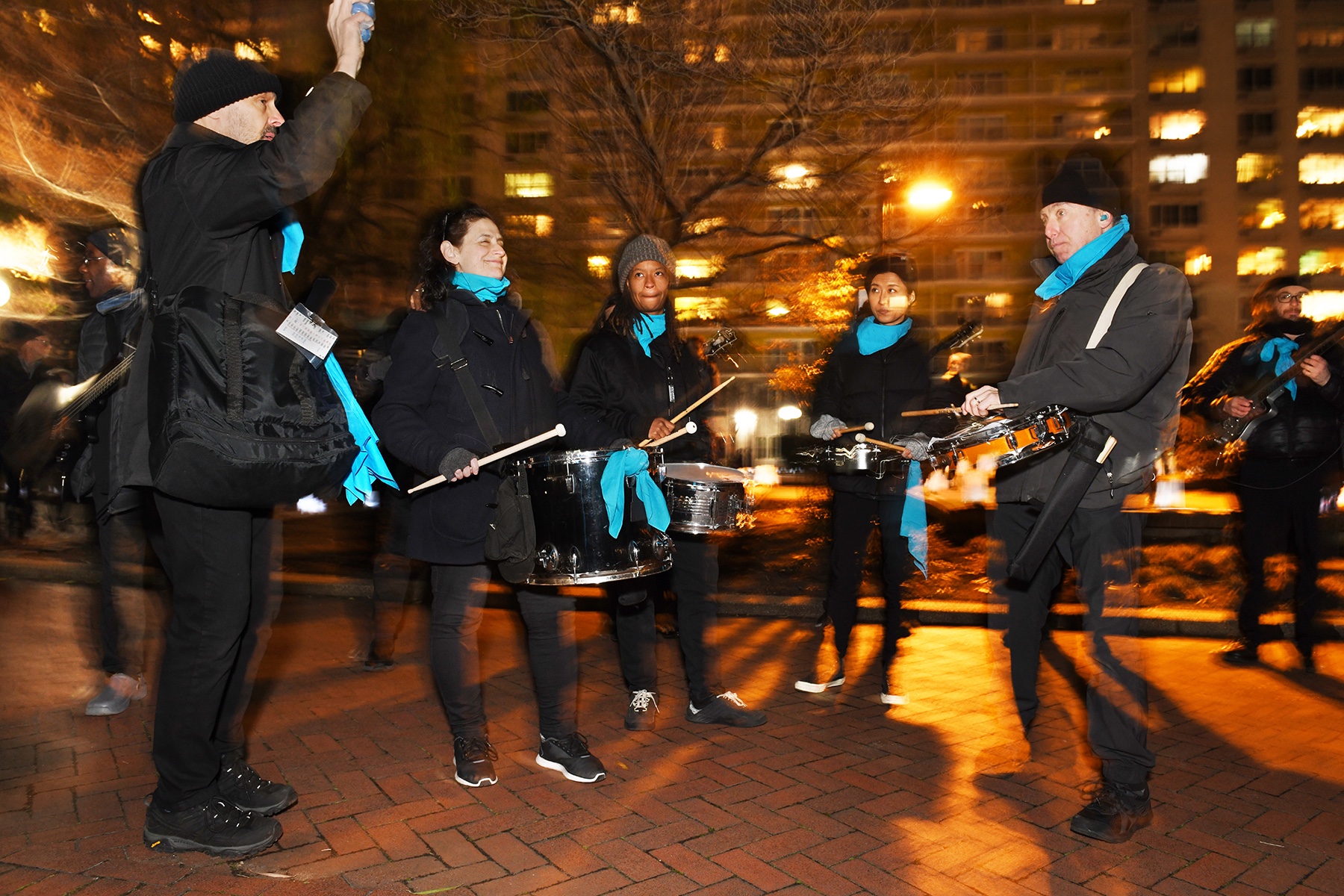
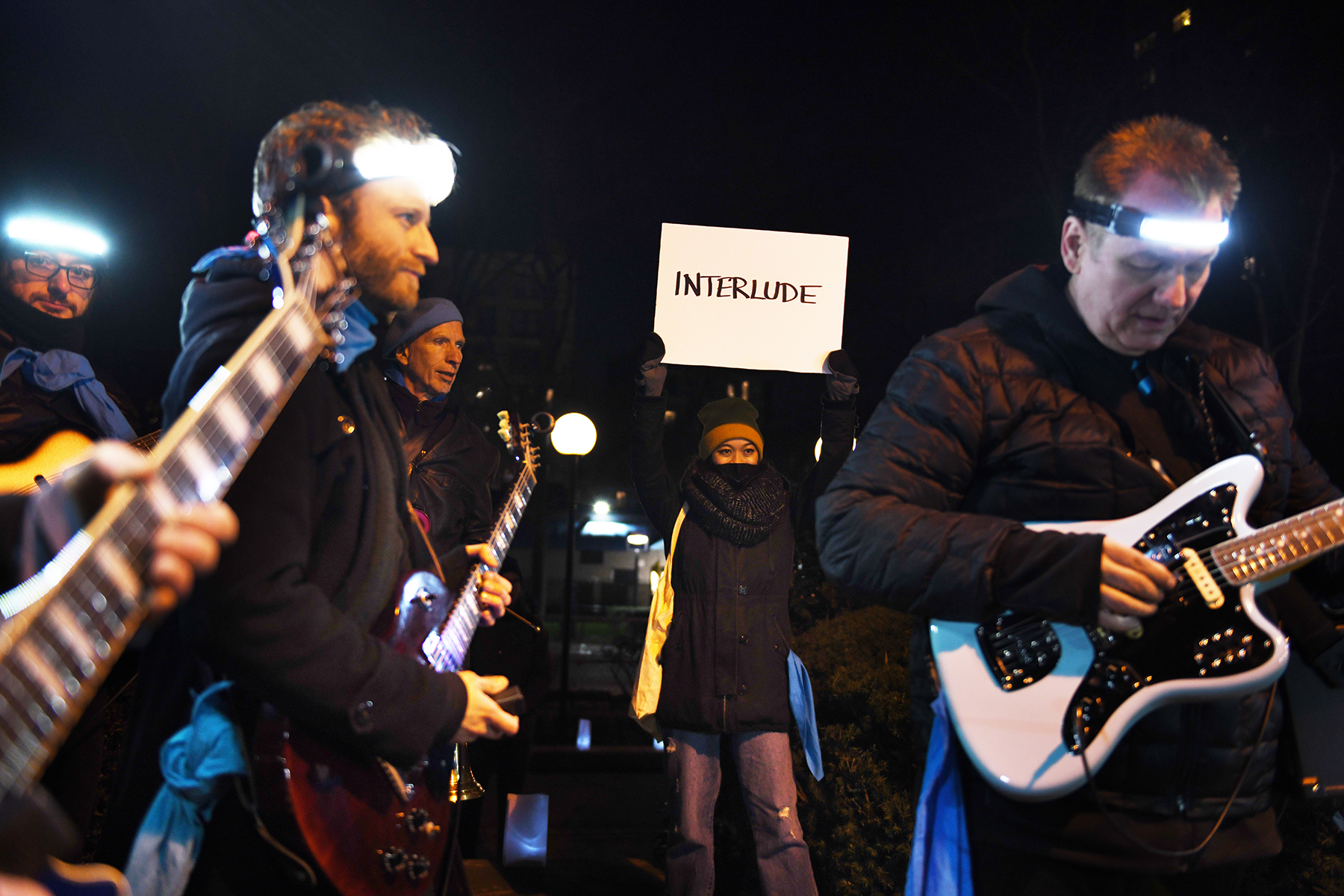
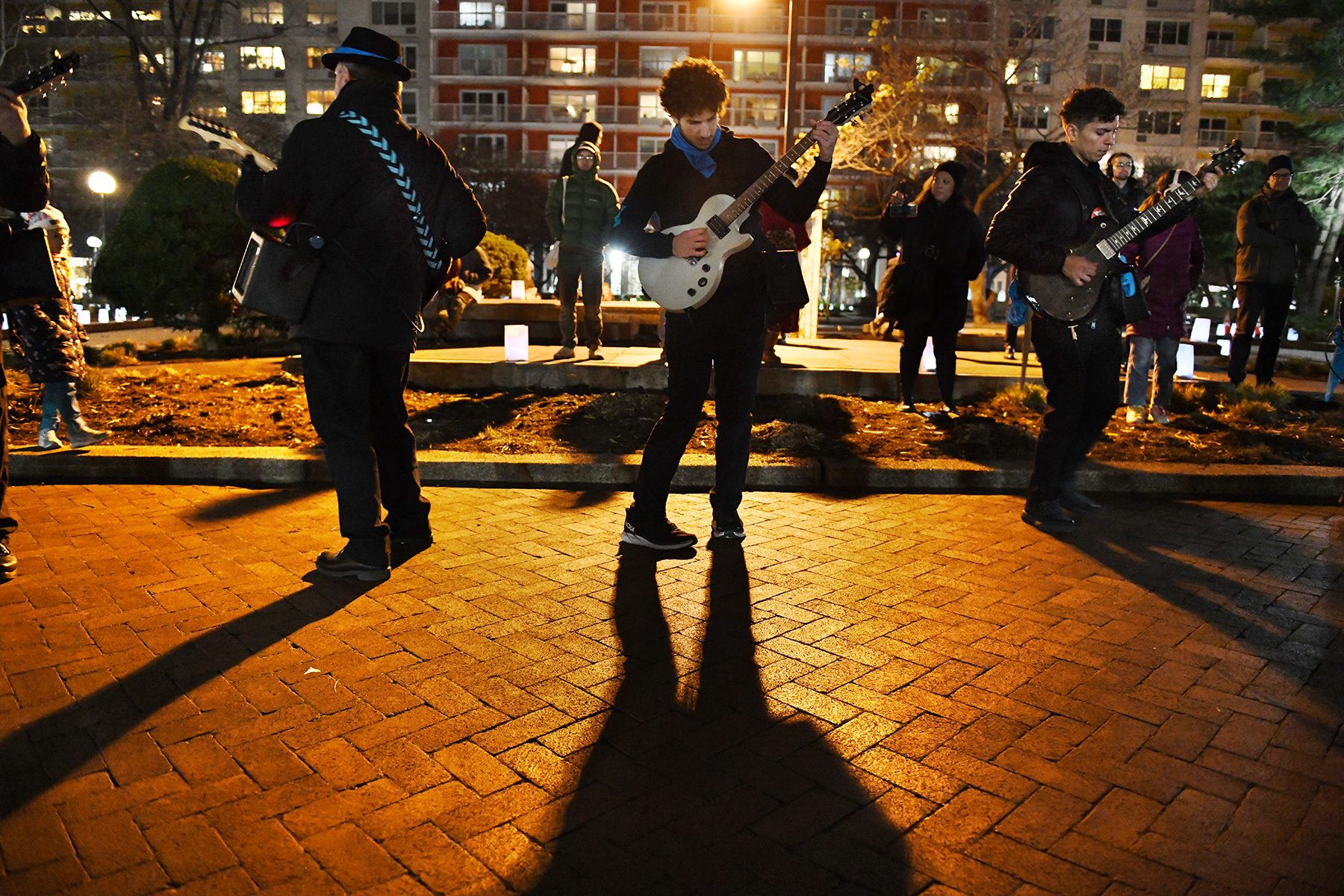
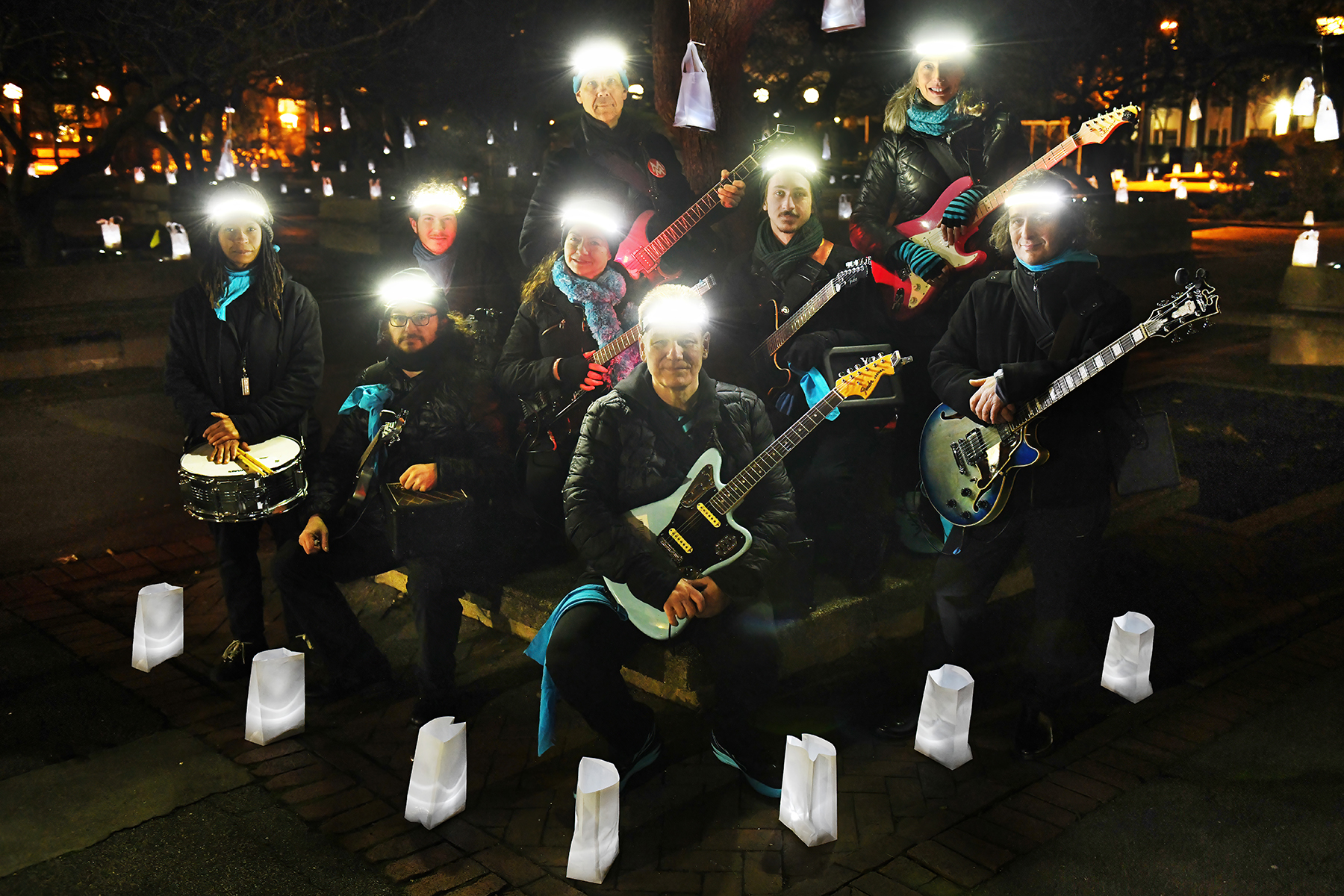
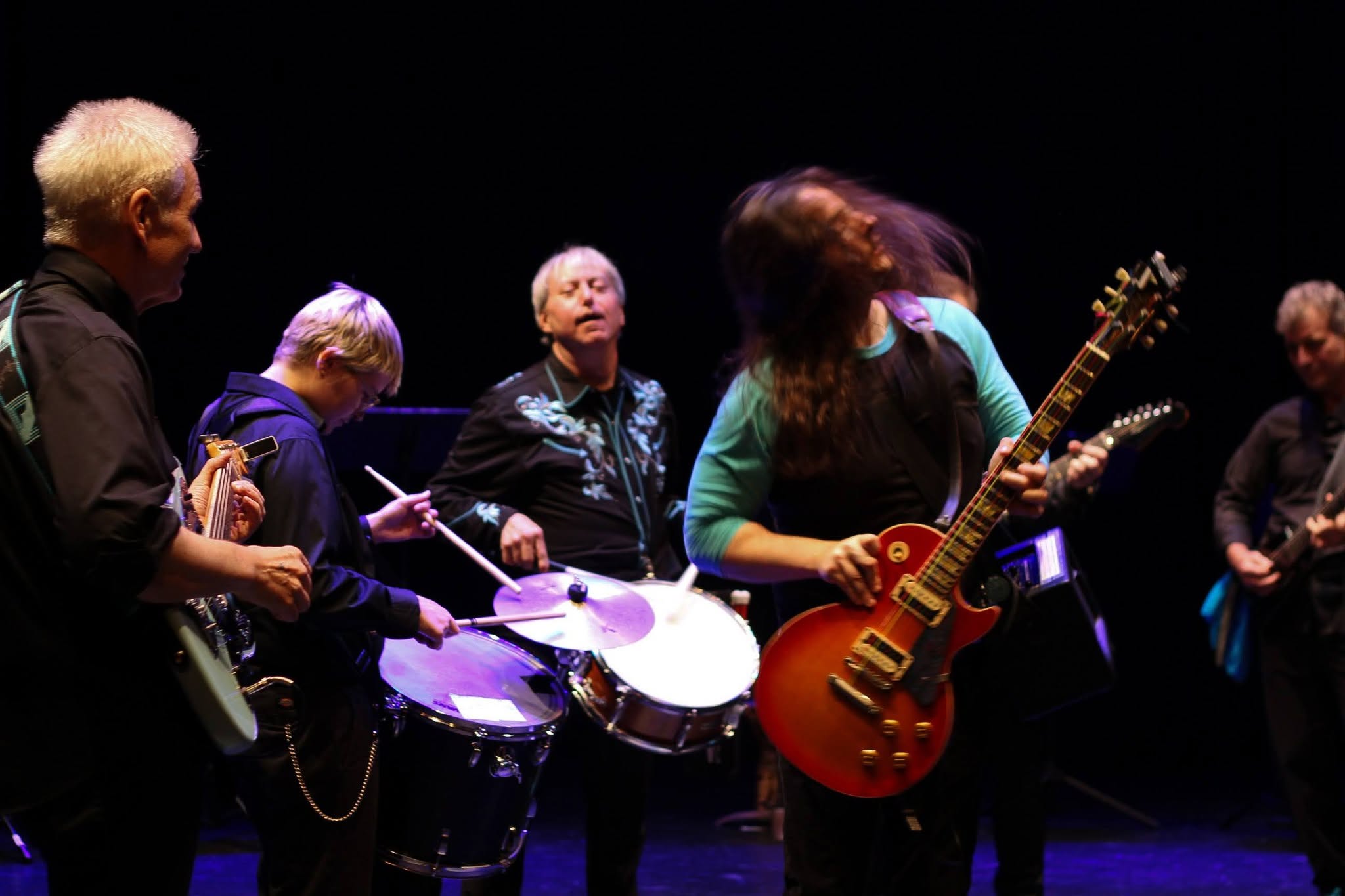
What happens when an orchestra refuses to sit still? For the past fifteen years, my ensemble Tilted Axes: Music for Mobile Electric Guitars and I have been exploring that question in streets, parks, museums, and public spaces around the world. With Necessary Music Only, presented September 17 through October 4 at Theater for the New City, we brought our distinctive musical philosophy indoors, transforming the Johnson Theater into a laboratory for sound, movement, and theatrical expression.
At the heart of this production was an idea I’ve been pursuing for many years: that music need not simply accompany movement, but that movement itself can become an essential part of musical composition.
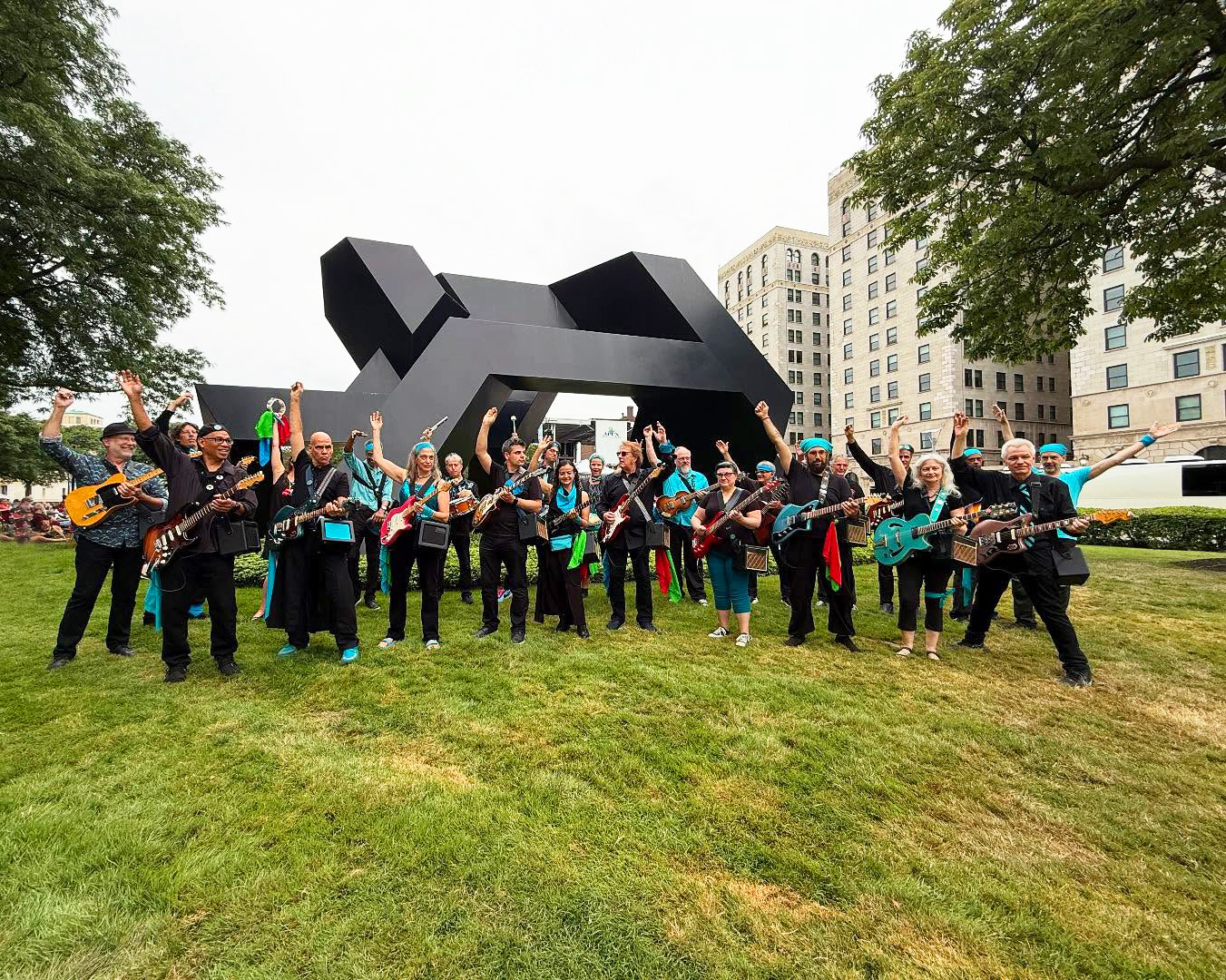
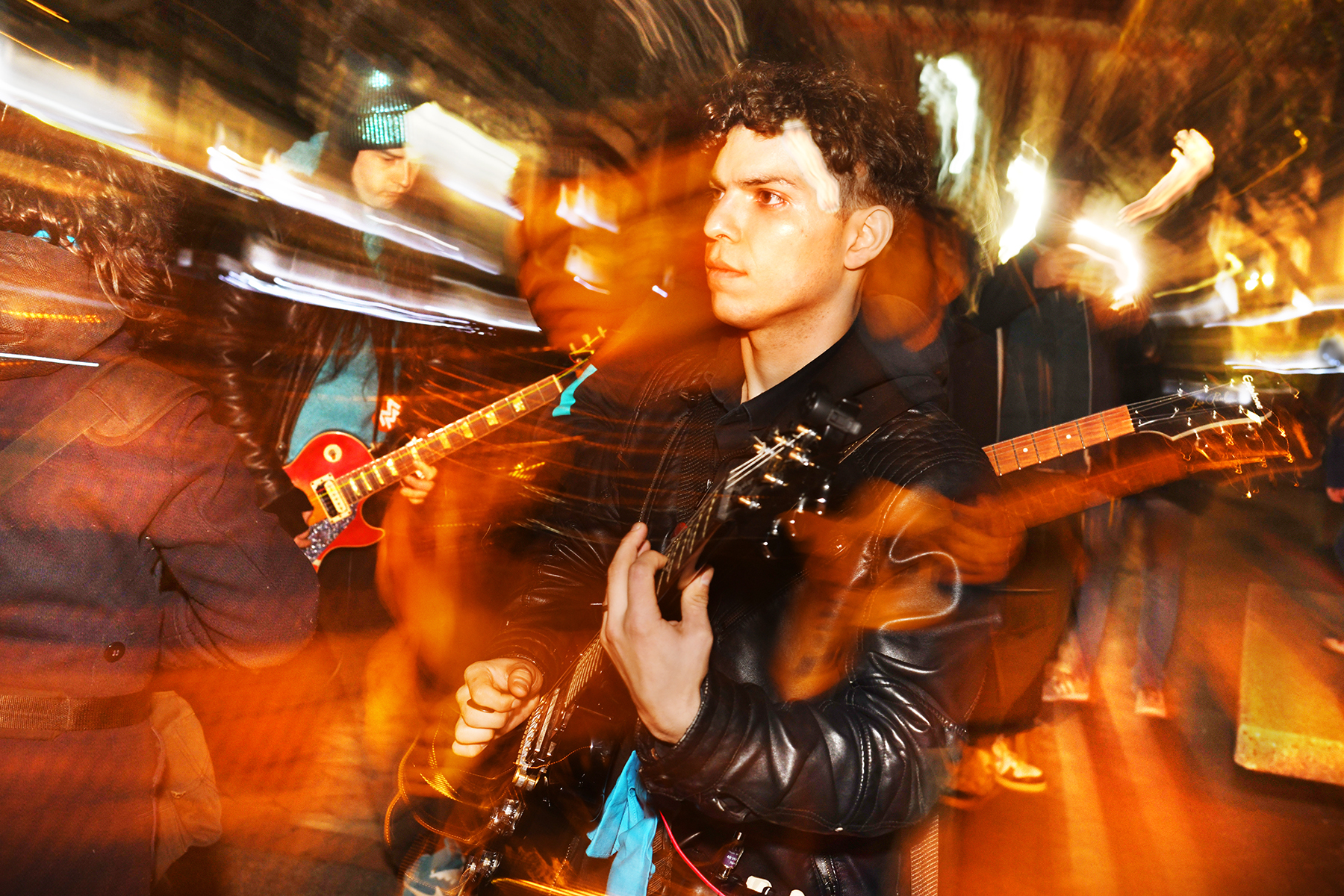
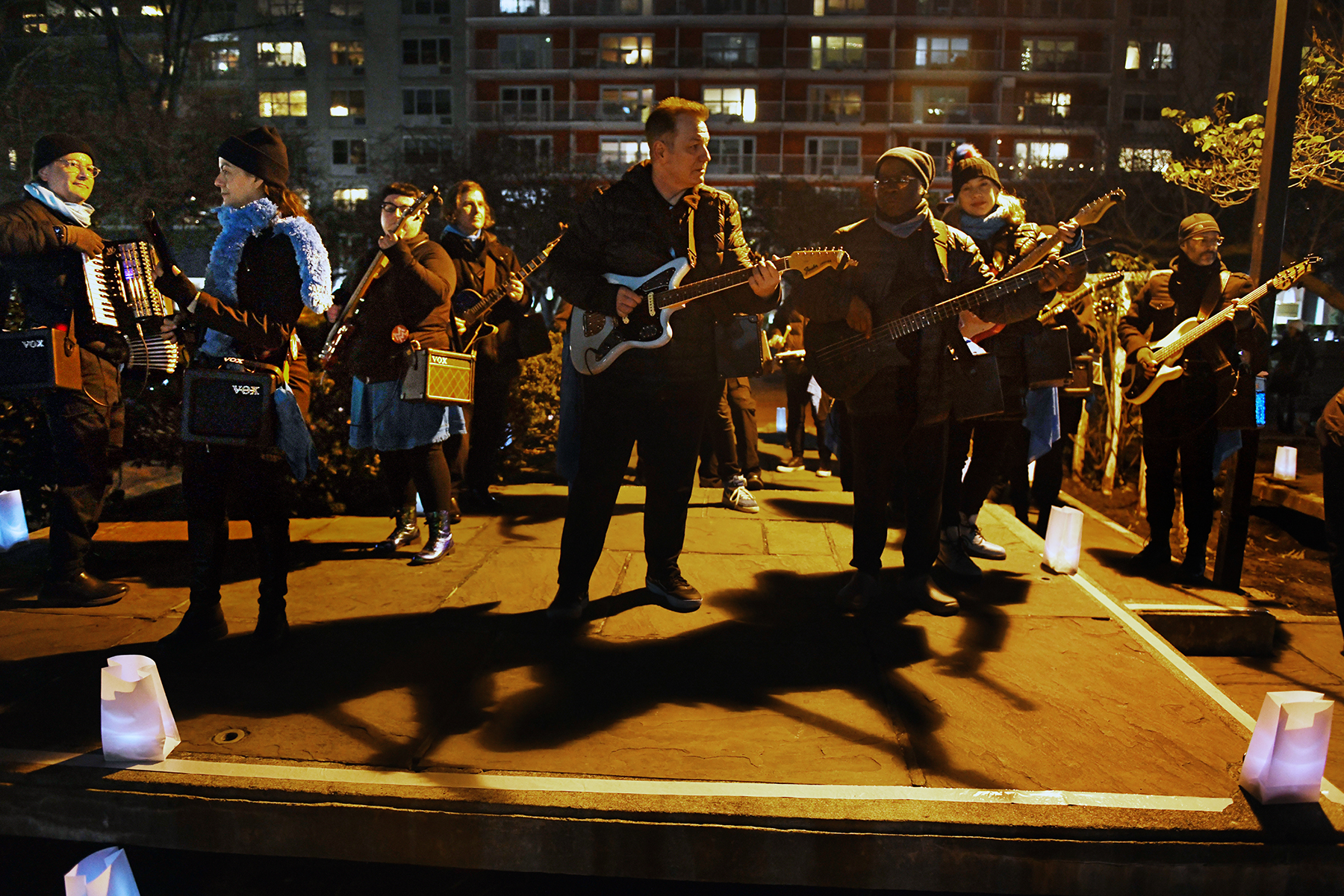
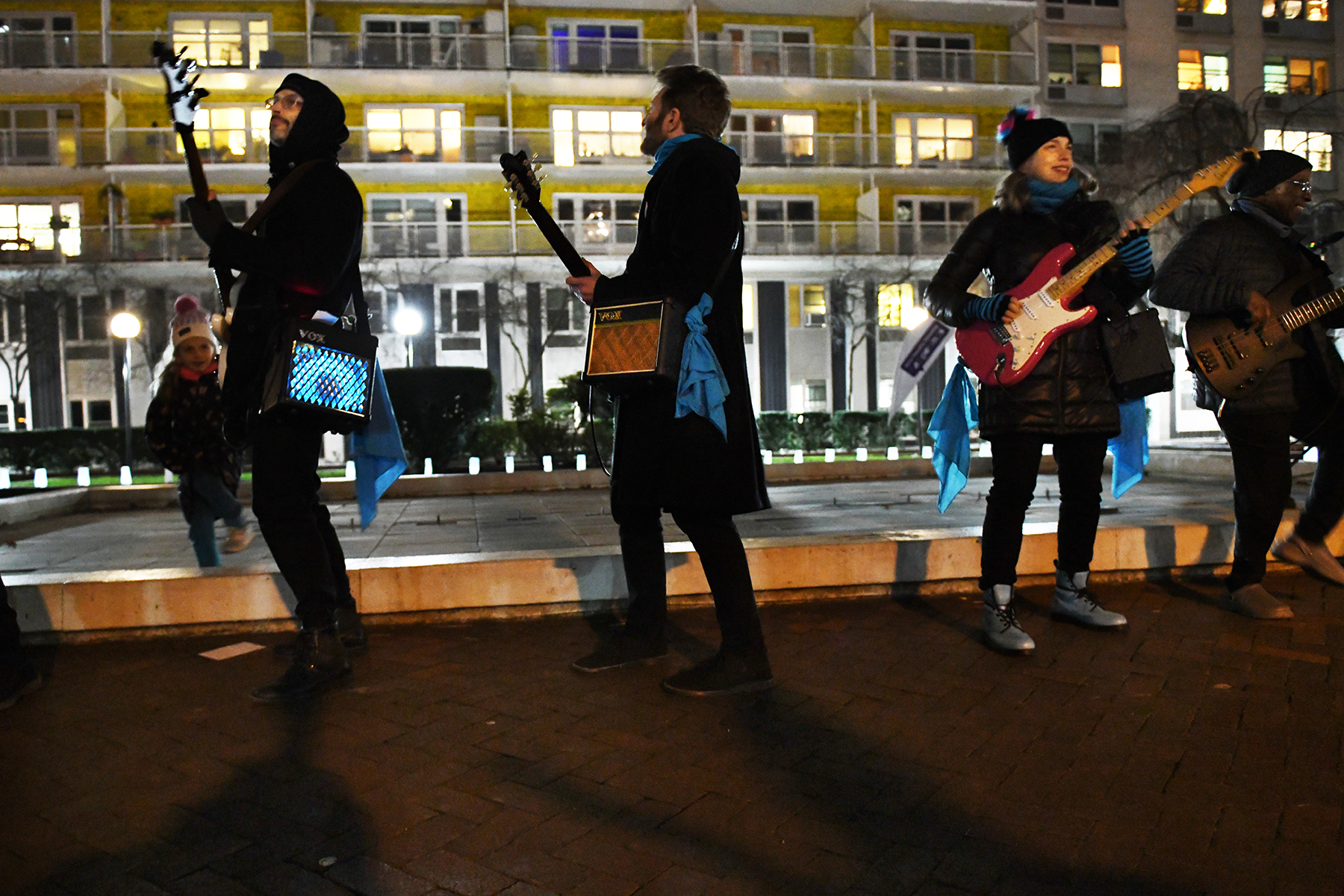
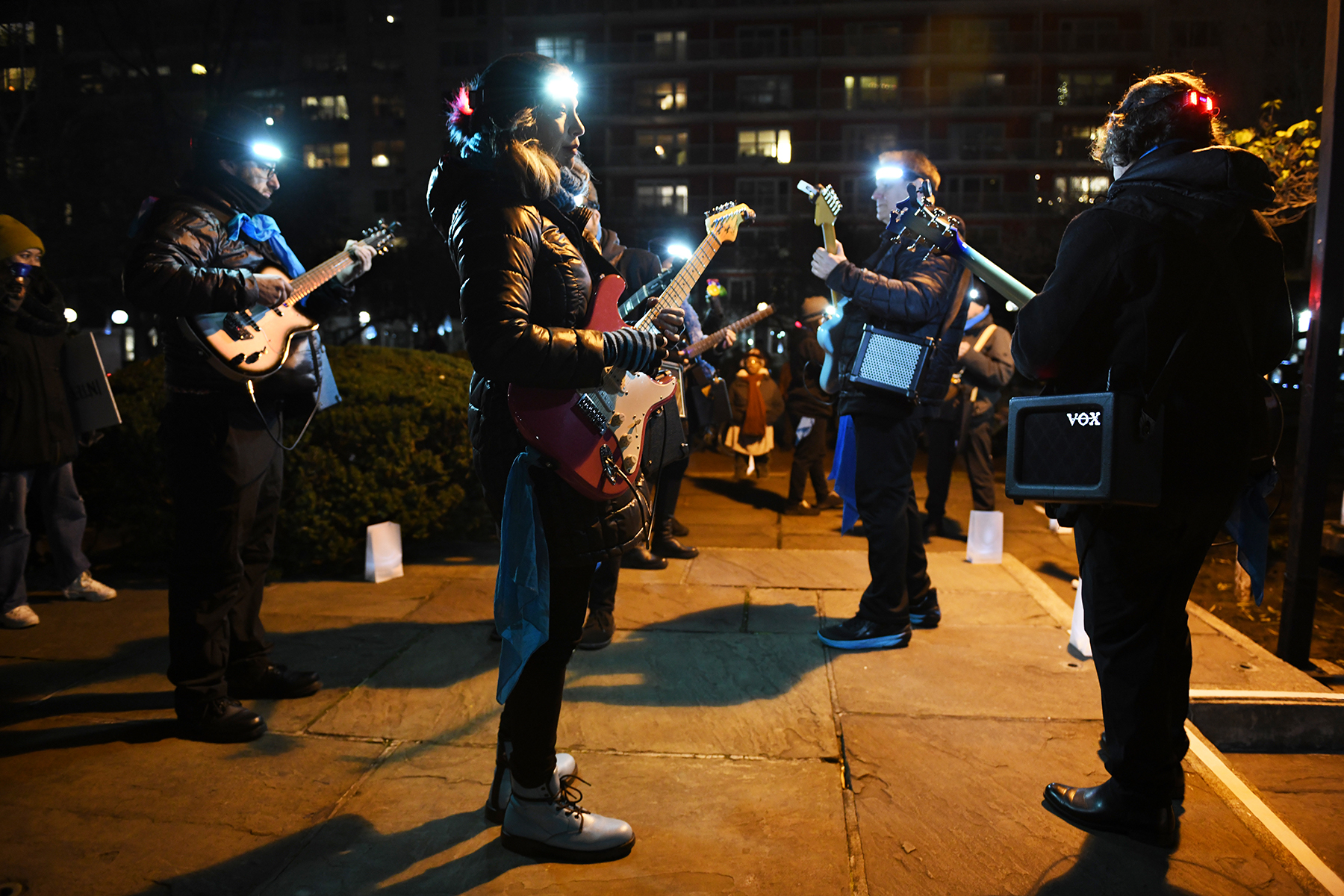
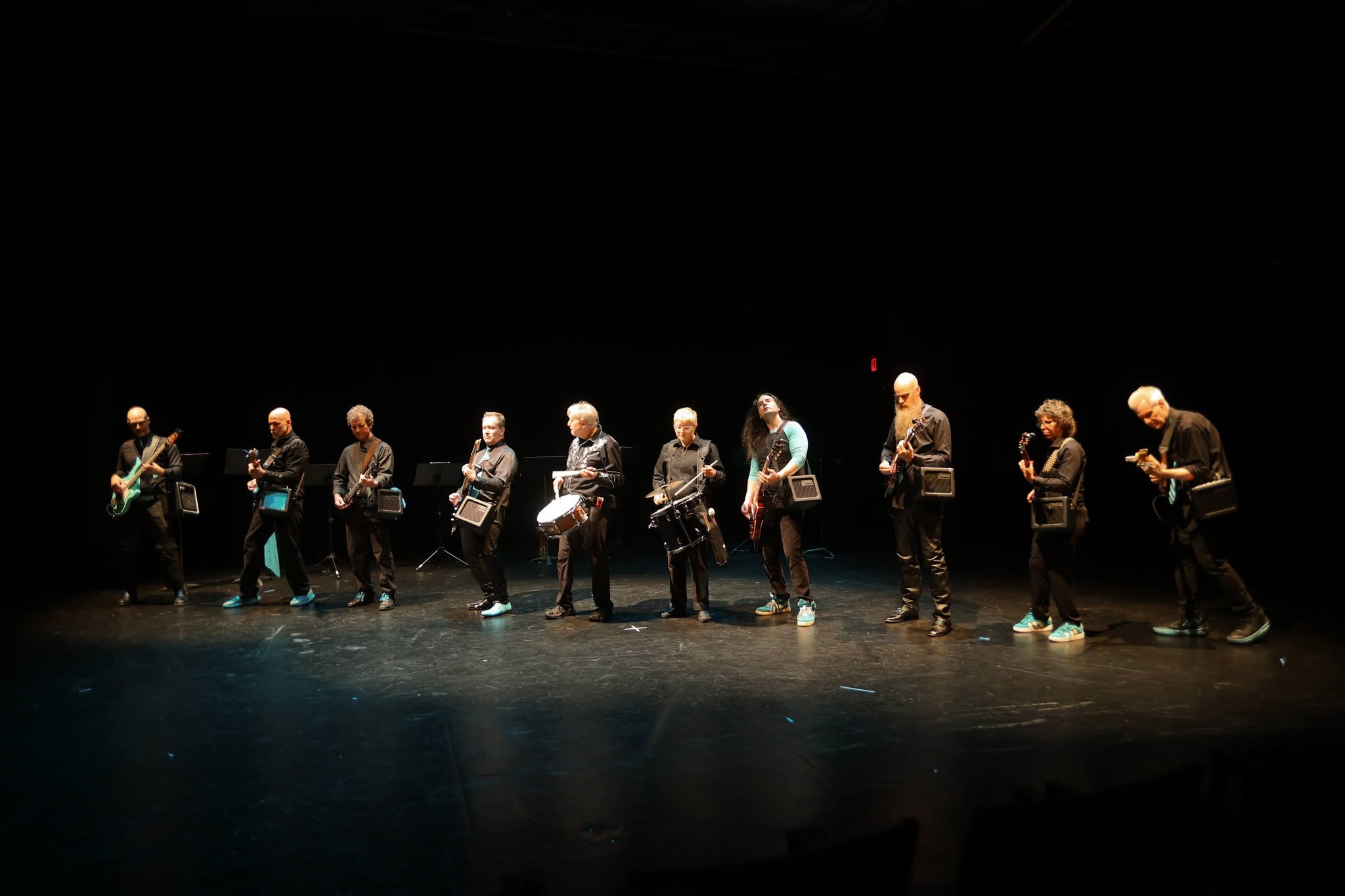
I founded Tilted Axes in 2011 with the idea of creating an ensemble that could take music out into the world. Our musicians perform on electric guitars powered by portable amplifiers, allowing us to move freely through performance spaces while maintaining the complexity and precision of a chamber ensemble. My compositions draw on influences ranging from minimalist repetition and Baroque counterpoint to rock, world music traditions, and experimental performance art.
I’ve never considered Tilted Axes to be a conventional guitar orchestra or a rock band. Our identity lies somewhere between the two, with elements of dance, procession, and ritual incorporated into the musical experience.
In Necessary Music Only, we brought these elements together within a more deliberately theatrical framework.
Music as Movement
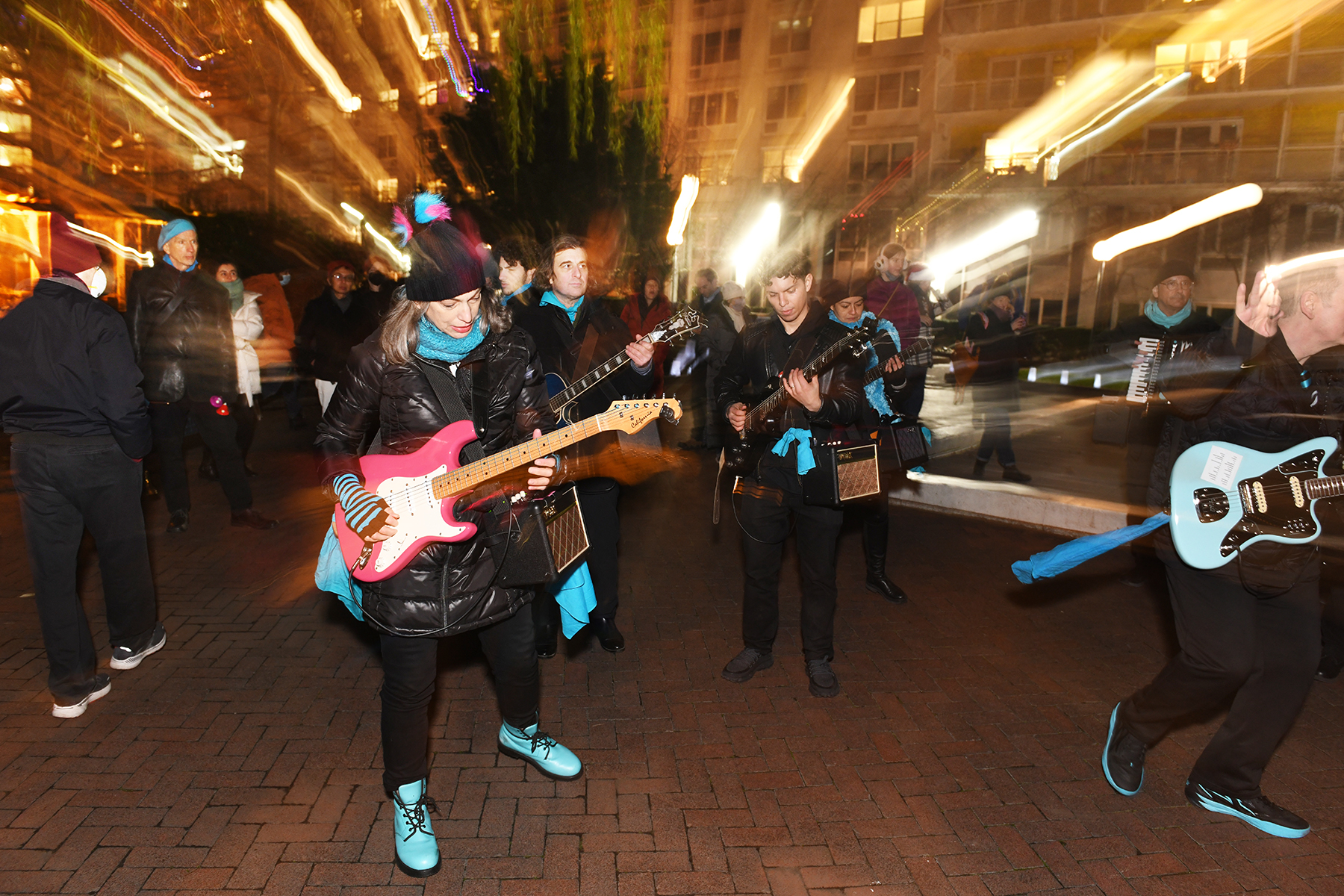
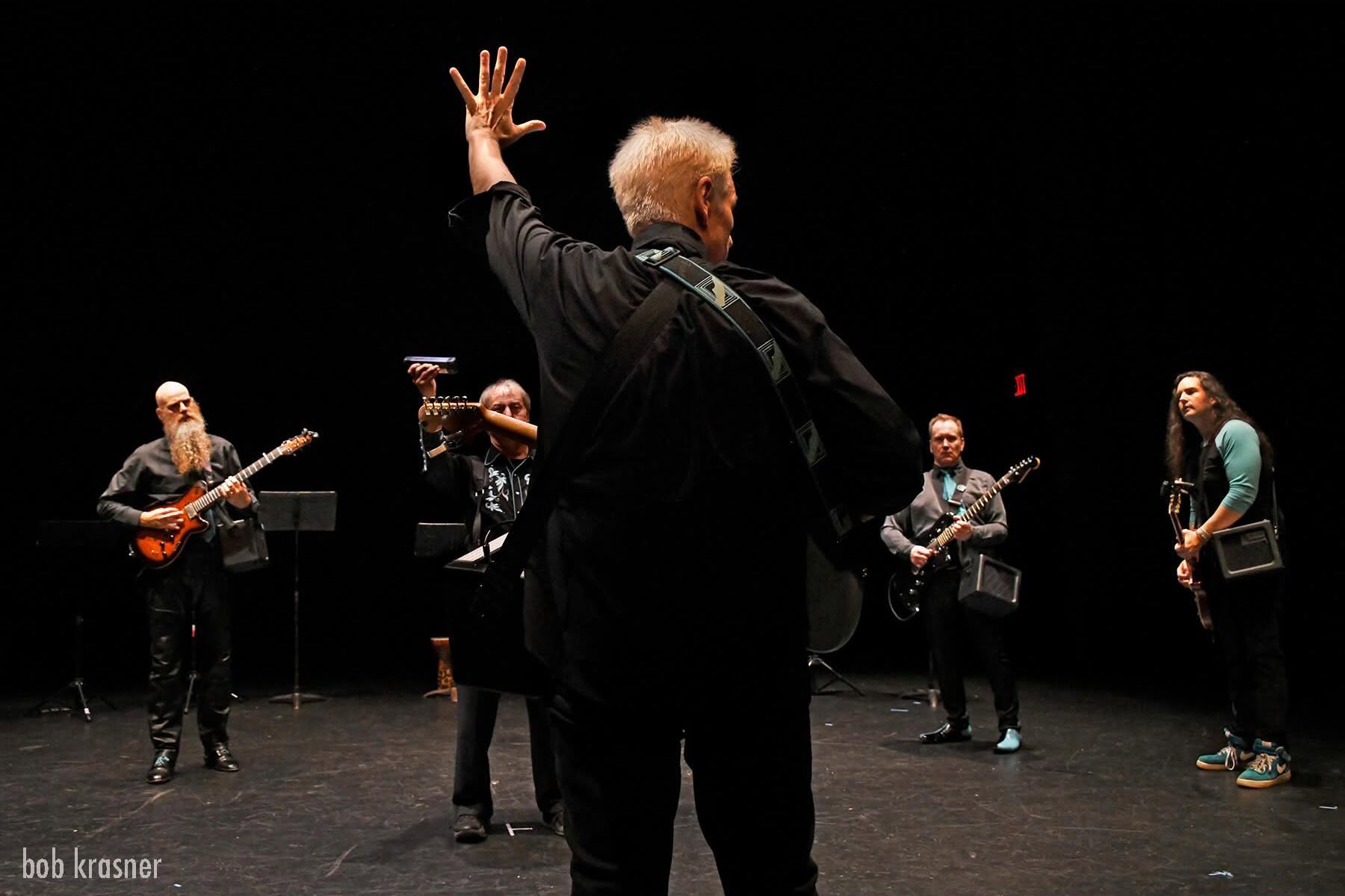
Working with choreographer Christopher Caines, I’ve been developing a performance vocabulary in which musicians become moving components of a larger visual and sonic architecture. Instead of occupying fixed positions, our performers navigate geometric formations, intersecting pathways, and shifting configurations that continually redefine the relationship between sound and space.
The implications are more substantial than they might initially appear.
In a traditional concert, the audience’s attention is directed toward a relatively stable arrangement of performers. In our work, the arrangement itself becomes part of the composition. Musical lines can be understood not only through pitch, rhythm, and harmony, but through the changing physical relationships between the players.
This approach has always interested me because of its relationship to experimental dance and music theater, particularly the interdisciplinary traditions associated with the downtown New York arts scene.
The absence of spoken dialogue or a conventional narrative is central to the concept. Rather than telling a story through characters and events, I wanted the work to suggest dramatic relationships through musical interaction, physical proximity, collective action, and contrast.
It’s theater in which the music carries the dramatic argument.
An Orchestra of Individual Voices
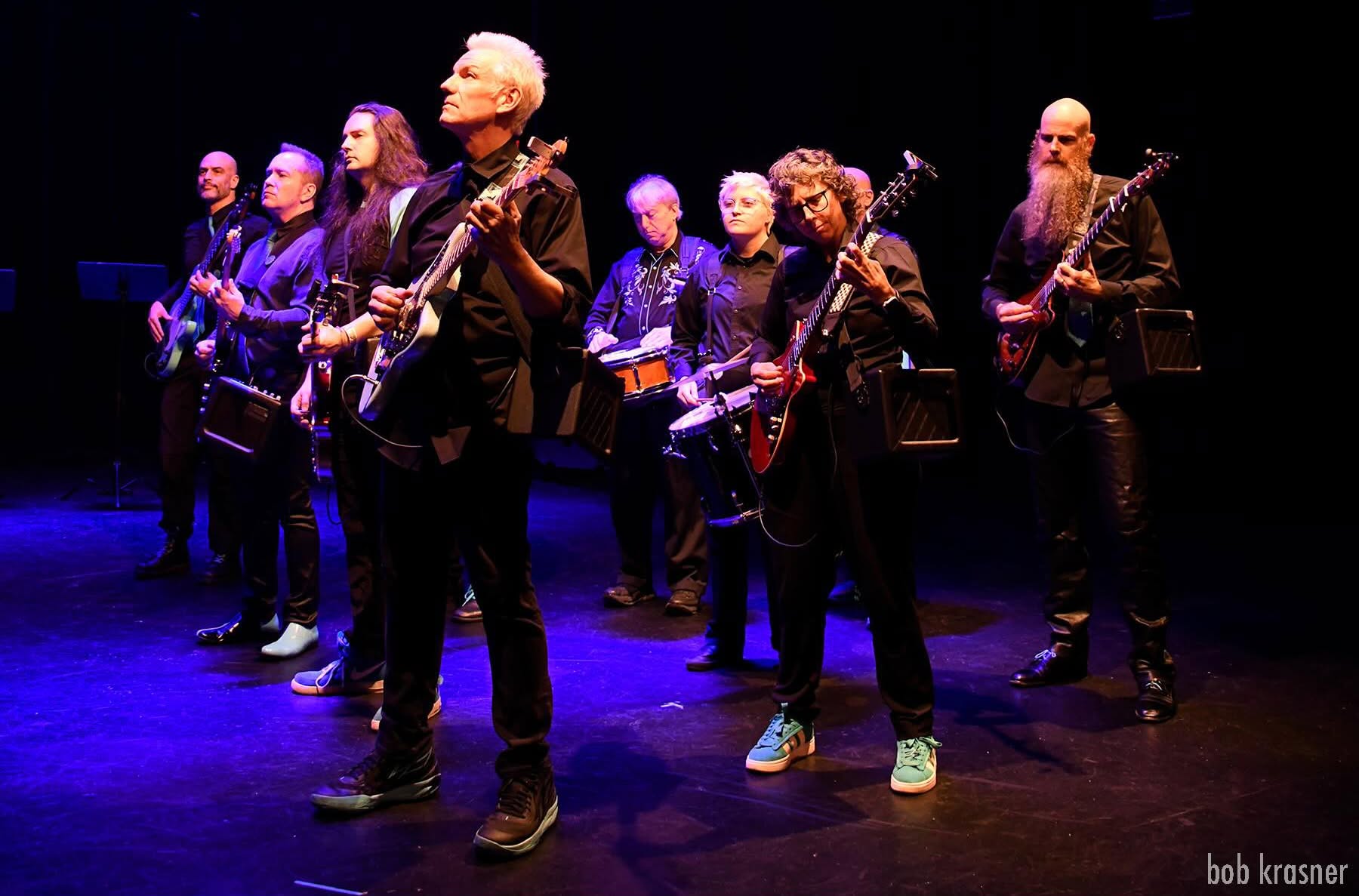
The musical foundation of Tilted Axes is polyphony, the simultaneous interaction of independent musical lines.
My compositions frequently employ interlocking rhythmic patterns, repeated figures, shifting accents, and contrasting instrumental textures. These techniques can create music that appears deceptively simple on the surface while revealing considerable structural complexity.
The electric guitar is particularly well suited to this approach. Its capacity for both percussive articulation and sustained resonance allows individual performers to move between rhythmic, melodic, and textural roles.
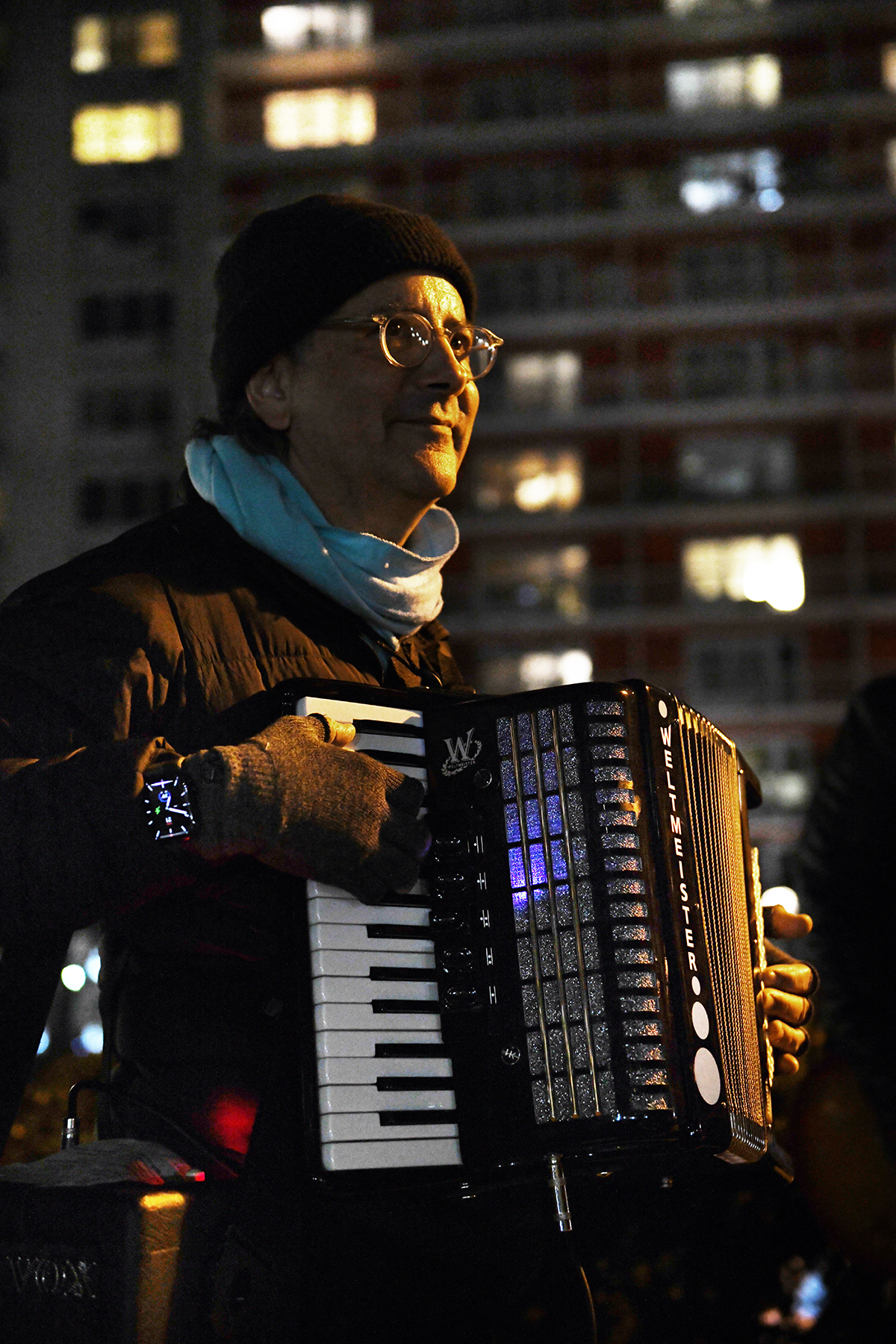
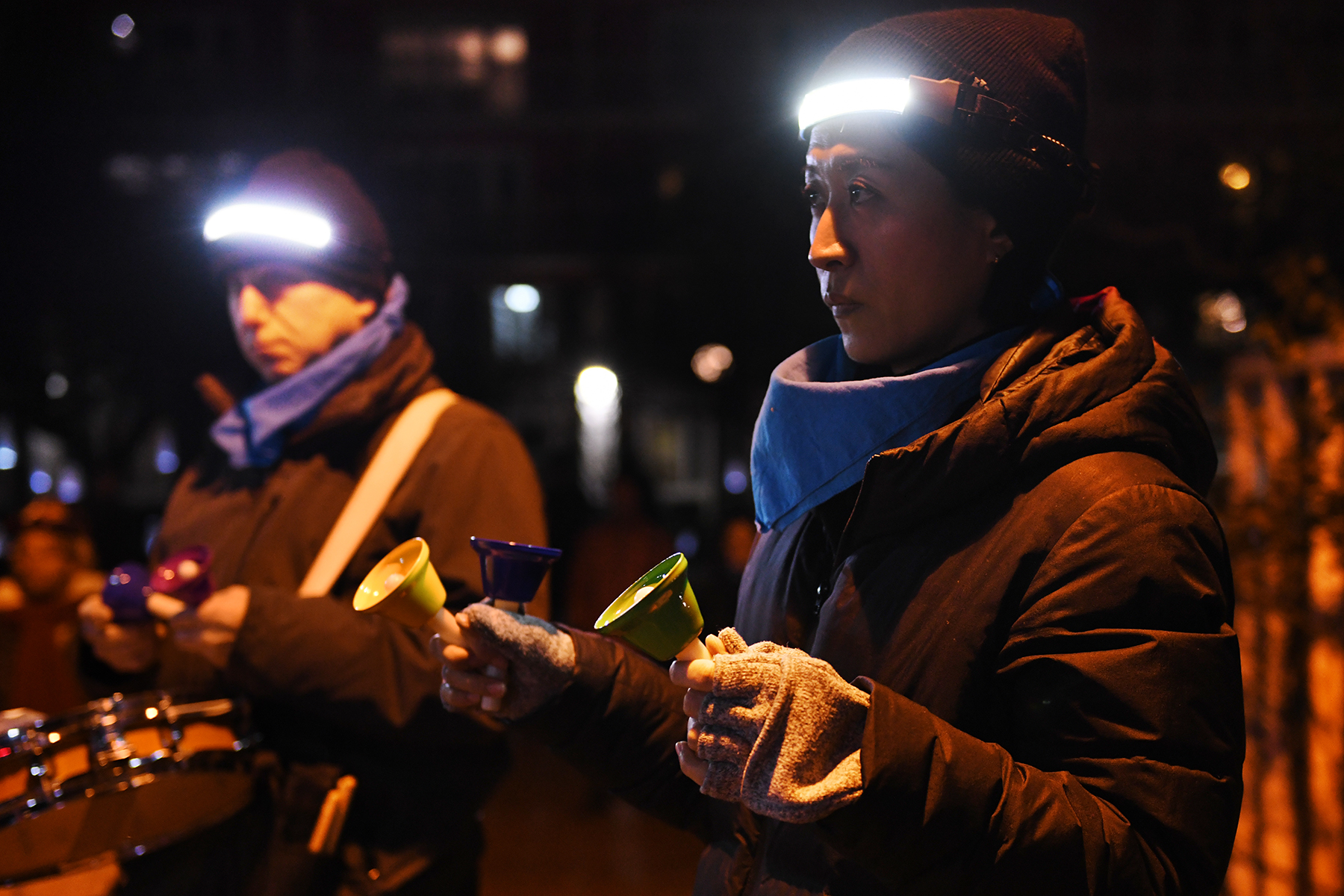
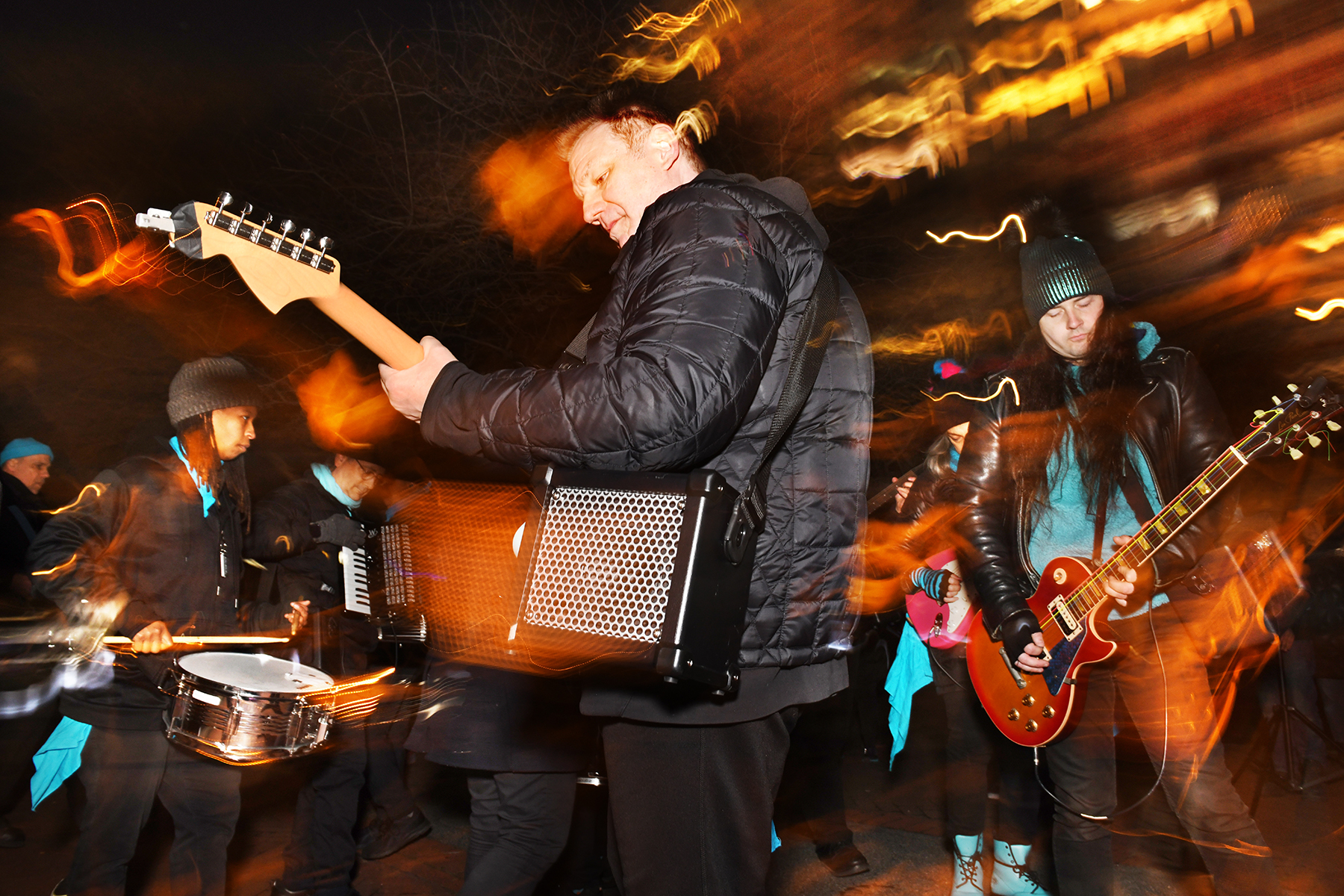
Within the ensemble, the addition of bass and live percussion provides both rhythmic propulsion and a counterweight to the guitars’ interwoven patterns.
Unlike the familiar guitar-centered spectacle of rock performance, my emphasis is on collective musical organization. Individual virtuosity serves a larger structure, with the ensemble functioning as a network of interdependent voices.
I’ve often thought of the ensemble in terms of a gamelan orchestra, where musical complexity emerges through the coordinated interaction of distinct parts. There are also connections to minimalist composition, although my musical language embraces a broader range of rhythmic and harmonic contrasts.
One of the things that continues to interest me most is the possibility of making musical structure physically visible. Counterpoint, normally experienced as an auditory phenomenon, acquires a spatial dimension when the musicians themselves become moving lines.
INFLUX: A Hidden Symphony
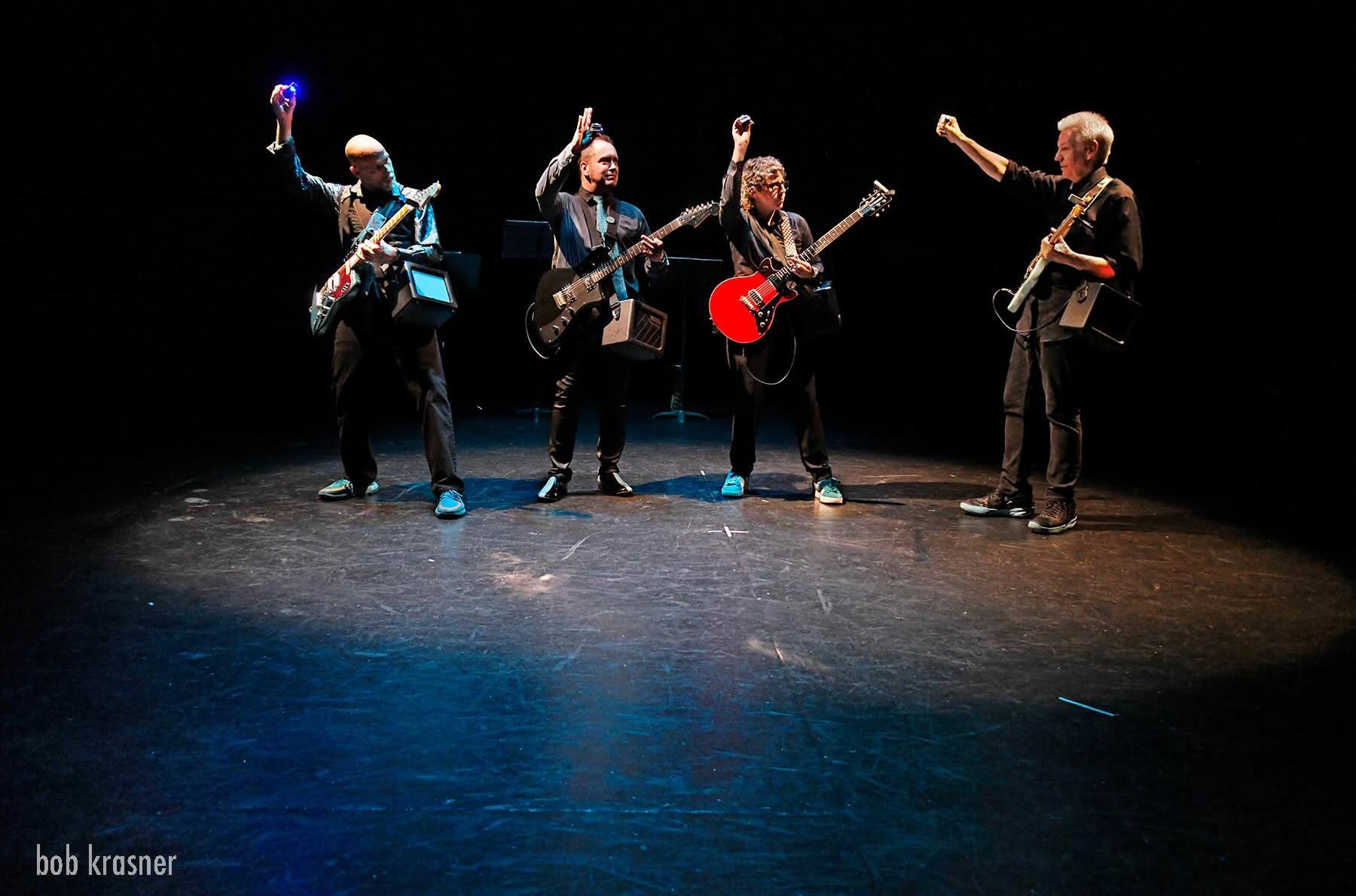
At the heart of Necessary Music Only lies what I think of as a hidden symphony. INFLUX, an ambitious composition in four movements, provides a larger musical architecture for the production, with each movement arriving at the conclusion of a successive quarter of the performance.
It is among the most intricate, demanding, and richly constructed works I’ve written for Tilted Axes, and I believe it represents an important step forward in the evolution of our musical language.
The composition draws upon our established vocabulary of interlocking rhythms, independent melodic lines, and shifting metric relationships, but develops these elements into something considerably more expansive. Musical ideas emerge, intersect, separate, and reassemble, creating an elaborate network of relationships that demands extraordinary concentration from the performers.
There is an almost orchestral ambition to the writing. Although the instrumentation remains rooted in electric guitars, bass, and percussion, I wanted the density of the counterpoint and the independence of the individual voices to suggest a musical world extending well beyond the conventional expectations of a guitar ensemble.
Perhaps most intriguingly, certain movements seem to evoke the psychological and emotional dimensions of space exploration. I hear something of the vast distances between planetary bodies, the mathematical precision of orbital trajectories, and the fragile exchanges of information between astronauts and ground control.
The effect isn’t intended as a literal depiction of outer space, but rather an exploration of the human experience of navigating it. Musical phrases can suggest transmissions sent across enormous distances, signals answered or interrupted, and independent objects moving through a shared gravitational system.
These associations seem particularly appropriate for an ensemble whose musicians are themselves engaged in a continual negotiation of distance, timing, and collective coordination.
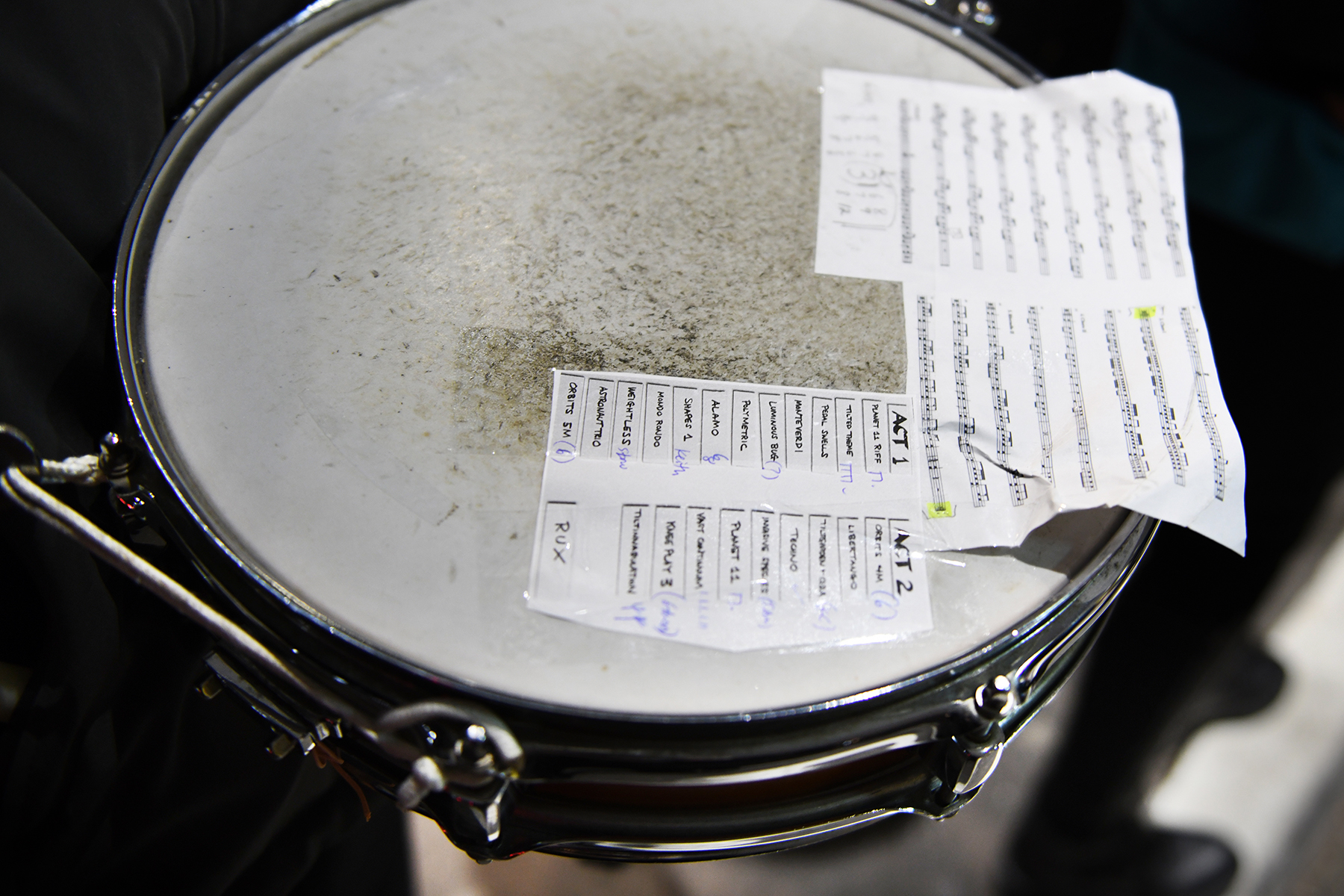
Because INFLUX is such a recent and demanding addition to our repertoire, we performed its four movements stationary, with the musicians reading from their scores. This provided a contrast to the choreographed works surrounding them. For a group whose identity is so closely associated with mobility, these passages offered an opportunity to concentrate attention on the extraordinary detail of the musical writing itself.
I don’t consider this a departure from our theatrical ambitions, but rather a stage in the work’s development. My intention is to bring INFLUX into the choreographic language we’ve established elsewhere in the production, allowing its elaborate musical structures to acquire a corresponding physical expression.
The prospect is exciting, and not without its challenges. Music of such rhythmic and contrapuntal complexity requires considerable precision, particularly when combined with movement. But I also see opportunities for a deeper integration of choreography and composition.
For me, INFLUX is more than a technical accomplishment or a series of evocative sonic landscapes. Its four-movement structure gives Necessary Music Only a sense of larger musical purpose, functioning almost as a symphony concealed within the theatrical presentation.
It also points toward a significant new direction for Tilted Axes. Our familiar techniques are no longer simply the basis for individual compositions or mobile performance situations. They have become the building blocks of a more extended, architecturally ambitious musical form.
If Necessary Music Only represents our growing confidence as a theatrical ensemble, INFLUX suggests an equally important evolution in our compositional identity.
From the Street to the Stage
Perhaps the most significant development represented by Necessary Music Only is our continuing transition from public-space intervention to theatrical presentation.
Tilted Axes originally distinguished itself by bringing unexpected musical experiences directly into everyday environments. Our processions challenged the assumption that audiences must enter a concert hall to encounter serious contemporary music.
In the theater, however, the relationship changes. The audience arrives expecting a performance, and we have to sustain attention within a defined dramatic framework.
That shift presents both opportunities and artistic challenges.
The controlled environment allows choreography, lighting, and visual media to assume more substantial roles. It also places greater emphasis on pacing, transitions, and the overall shape of the production. What might function as an exhilarating encounter on a city street must develop a different kind of continuity over an extended theatrical work.
This has become one of the central artistic questions for me: how can an ensemble whose identity is rooted in mobility and unpredictability preserve those qualities within the formal boundaries of a stage production?
I think the answer lies less in recreating the spontaneity of street performance than in developing a theatrical language appropriate to our distinctive musical resources.
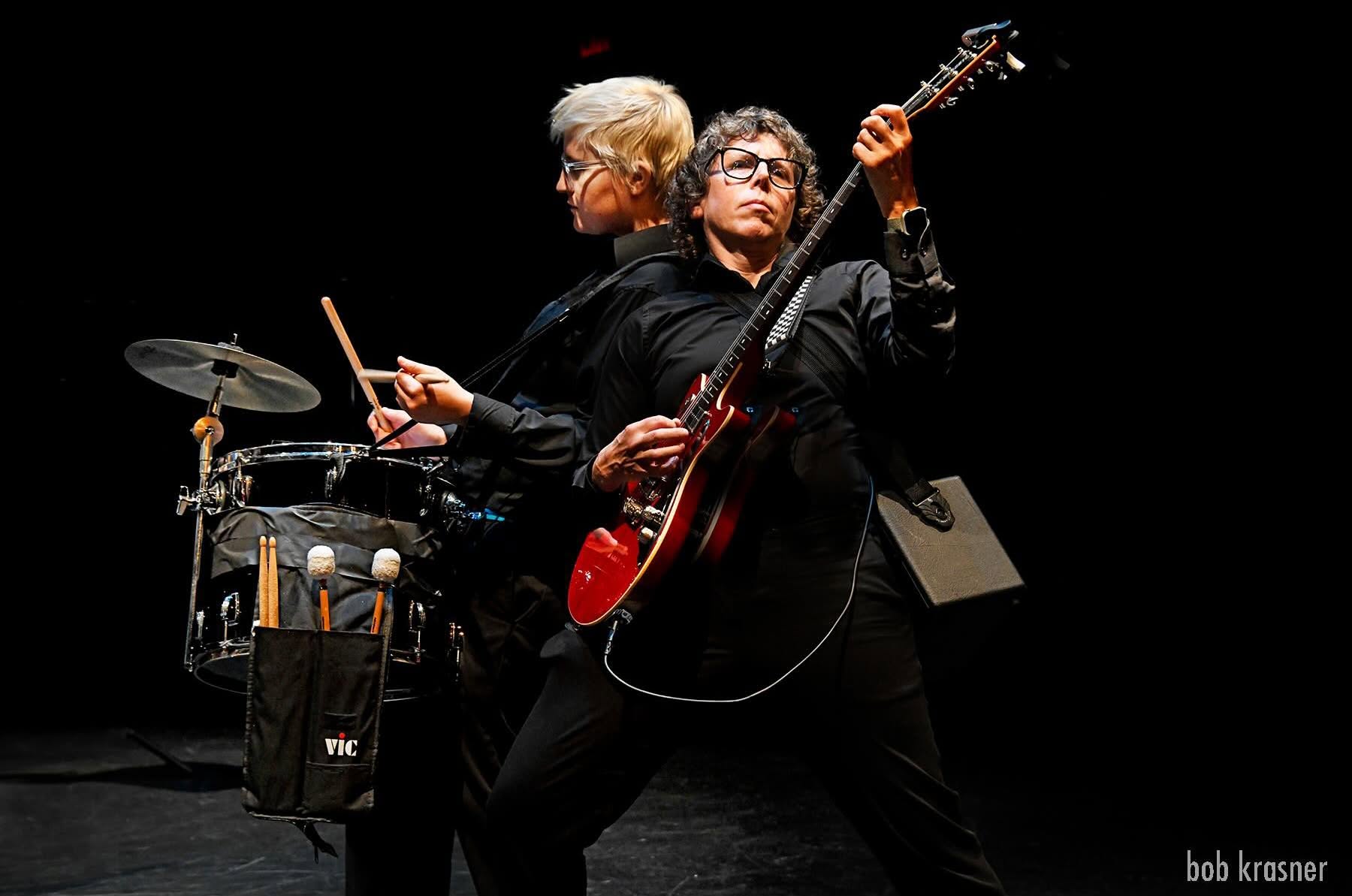
My collaboration with Christopher Caines has been especially important in this respect. His choreography provides a means of organizing the musicians’ movements without reducing them to decorative accompaniment. Our challenge is to establish a genuine relationship between musical structure and physical action, allowing each to inform the other.
The production’s use of lighting and visual media further extends that vocabulary, suggesting possibilities for a form of music theater in which instrumental performance remains the primary expressive medium.
A Distinctive Place in Contemporary Performance
There are precedents for combining instrumental music with theatrical movement, from the instrumental theater of Mauricio Kagel to the multimedia productions of Robert Wilson and the choreographic structures associated with experimental opera.
These are traditions I’ve long been interested in, but Tilted Axes approaches this territory from a different direction.
Our starting point is not opera, dance, or traditional theater, but the practical and musical possibilities of a mobile electric-guitar ensemble.
That distinction matters to me. Rather than adding musicians to an existing theatrical concept, we’ve been developing a theatrical practice out of the particular capabilities of our instruments and performers.
The result is a project that resists easy categorization. It can be approached as contemporary chamber music, experimental theater, or a form of choreographed sound installation, but none of these descriptions is entirely sufficient.
The title Necessary Music Only also suggests a broader aesthetic position. In an era when performances frequently depend upon elaborate technological spectacle, I’m interested in what can be accomplished with comparatively direct materials: musicians, instruments, movement, light, and the shared experience of a room.
That economy of means doesn’t necessarily imply simplicity. On the contrary, the complexity emerges from the relationships among those elements.
An Evolving Artistic Language
Our three-week engagement at Theater for the New City represents an important stage in the development of Tilted Axes.
Following our previous theatrical presentation, Circle With No Center, in 2025, Necessary Music Only continued our exploration of how a project originally conceived for public spaces might evolve into a sustained form of music theater.
It also raises productive questions about our future. How might more intricate musical passages be integrated with movement? How can the physical arrangement of performers become an increasingly precise compositional tool? And how might these techniques develop into a theatrical language capable of sustaining larger works?
These questions become especially relevant when I consider the future of INFLUX. Its four movements already possess the scale, sophistication, and internal architecture of a substantial concert work. The next challenge will be to discover how that complexity can be translated into movement without compromising the precision that makes the music so compelling.
In this sense, the stationary performances of INFLUX were not merely a practical accommodation for new material. They represented a stage in an artistic process unfolding in public, with the musical foundation established and its theatrical possibilities still to be explored.
One of the ideas I wanted to explore with Necessary Music Only is that the relationship between music and theater need not be hierarchical. The music doesn’t merely support the staging, nor does the staging simply illustrate the score. Both belong to the same artistic proposition.
For Tilted Axes, moving indoors isn’t a retreat from our original mission of taking music out into the world. It’s an expansion of that mission into another kind of space, one in which the familiar boundaries between concert, choreography, and theater can be reconsidered.
If there’s one idea I hope people take away from Necessary Music Only, it’s that music isn’t simply something that happens in a space. Music can organize, animate, and transform that space.
And with INFLUX pointing toward an increasingly ambitious musical and theatrical future, I believe some of the most intriguing possibilities for Tilted Axes still lie ahead.
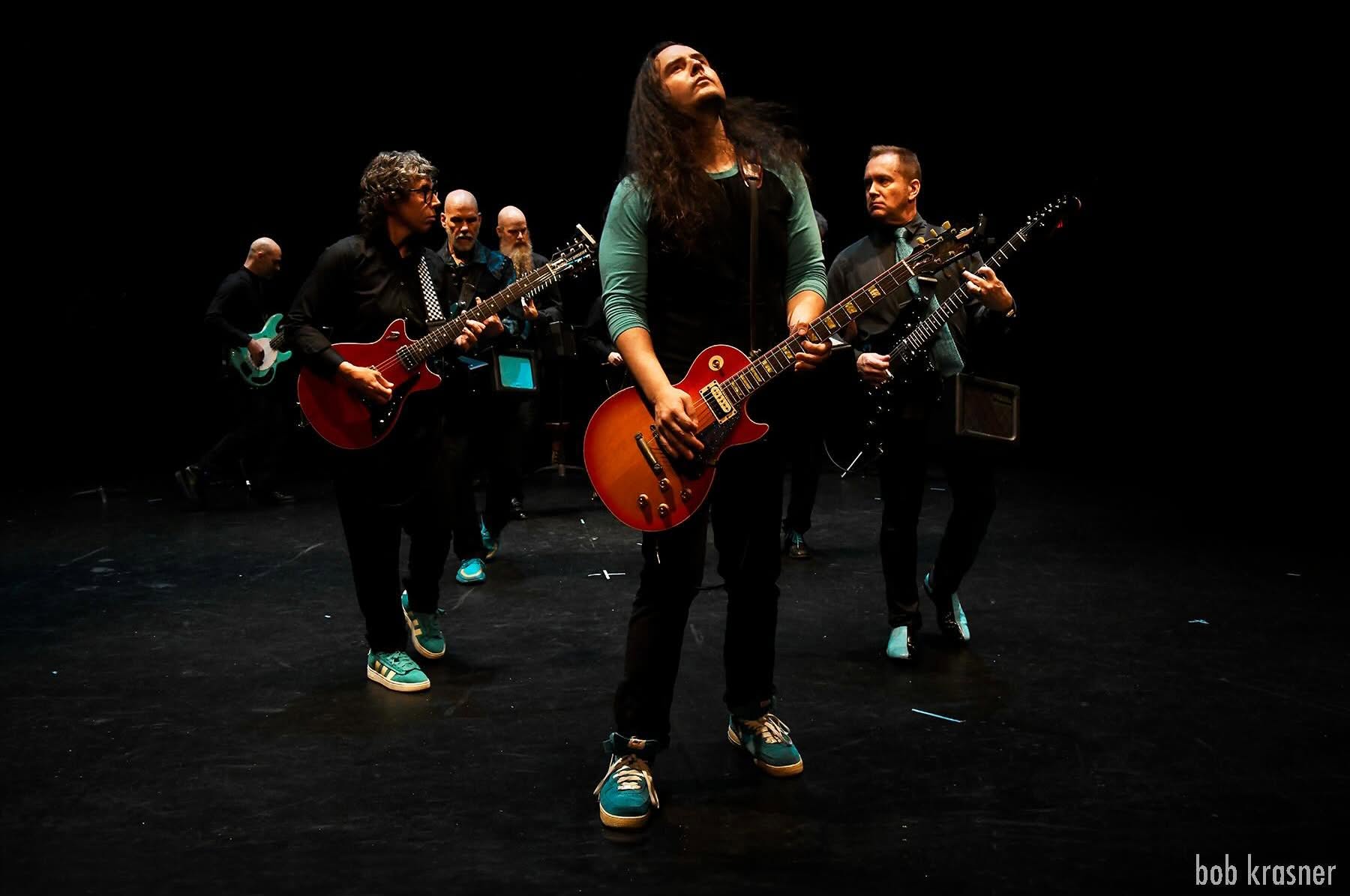
Tilted Axes: Necessary Music Only was presented September 17–October 4, 2026, at Theater for the New City, Johnson Theater, New York City. Created and directed by Patrick Grant, with music by Grant and Tilted Axes composers, choreography and lighting by Christopher Caines, and technical direction by Elijah Smith, and Olivia Talian stage manager. The production featured performers Gene Ardor, Lori Bingel, John Ferrari, Grace Goss, Patrick Grant, John Halo, Jim Lee, Jeremy Nesse, James Schoen, and Dmitri Shapira. Photography and video were provided by Jocelyn Gonzales and Jack Wang. Produced by Peppergreen Media.