Backtracks: Lynne McVeigh

BT-Logo-JG

On this installment of Backtracks, producer/director and film professor Lynne McVeigh describes how a lost astronaut landed in her first sound design class. I was a student in one of those early Sound Image courses, and when I asked Lynne why she chose to open our initial meeting with a song about a doomed space mission, this was her response. Listen to her story below:

Lynne found the David Bowie track as sonically cinematic as any film she could have presented to a bunch of budding storytellers. In the excellent blog “Pushing Ahead of the Dame”, Chris O’Leary has been writing about David Bowie, song by song, “in rough chronological order, with exceptions.” You can find his wonderful history of “Space Oddity” on THIS POST. In it, Mr. O’Leary writes:

“Space Oddity” has come to define Bowie, perhaps because it’s as protean as its creator has tried to be. It’s a breakup song, an existential lullaby, consumer tie-in, product test, an alternate space program history, calculated career move, and a symbolic end to the counterculture dream—the “psychedelic astronaut” drifting off impotently into space (Camille Paglia suggested the last); it’s a kid’s song, drug song, death song, and it marks the birth of the first successful Bowie mythic character, one whose motives and fate are still unknown to us.
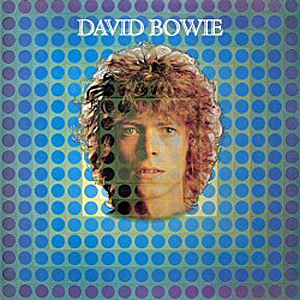
david_bowie_space_oddity

The 1969 track introduced listeners to astronaut Major Tom, and the song title alluded to Stanley Kubrick’s 2001: A Space Odyssey. In the lyrics, Major Tom launches into space, but soon loses contact with mission control and journeys into the unknown, sending his love to his wife back on earth.

But we don’t completely lose touch with Major Tom, he makes a reappearance in the “sequel” to his story, Bowie’s “Ashes to Ashes “single off the Scary Monsters LP, although in this case, Major Tom is a “junkie”, and Bowie is likely referring to his own voyage through inner space.

In 1983, German synth-pop sci-fi aficionado Peter Schilling picked up the story of Major Tom, with the astronaut bidding farewell to his wife and saying  “Now the light commands/this is my home/I’m coming home.” But in the music video, the song ends with an image of a fiery object plummeting downward through earth’s atmosphere.

There are numerous references to Major Tom in music and pop culture, including Bowie’s own remix of “Hallo Spaceboy”, which he released with the Pet Shop Boys in 1996.  K.I.A. produced the song “Mrs. Major Tom” on his Adieu Shinjuku Zulu album, telling the story from the point of view of Major Tom’s grieving wife, hopelessly scanning the skies for sign of her lost husband. Incidentally, Sheryl Crow covered this song for the album, Seeking Major Tom, by that other iconic space traveler, William Shatner.

ETA: It should be added that Commander Chris Hadfield, the Canadian astronaut who just ended a five month stint aboard the International Space Station, ended his mission with what must be the most stunning entry into the Major Tom mythos. A real-life spaceman singing to us from far above the world.

Backtracks: Patrick Grant

BT-Logo-JG
Ever wonder where Tilted Axes creator Patrick Grant finds inspiration for those infectious riffs? We’ll find out on this edition of BACKTRACKS, when a 4 year old future composer discovers his musical destiny on TV.

Listen to Patrick’s story here:

TB2013 (7 of 20)

Now that I’m a professional composer and performer, there’s supposed to be this stark moment of epiphany. I was always jealous of my schoolmates, who, by the time they were 9 knew all four symphonies of Brahms and other works by Beethoven and such, and they were exposed to that. So I didn’t get a lot of that, but I got a lot of other stuff. After years of thinking, oh, I wish I had more of a classical education, it came back to me that, no, I really grew up listening to a lot of cool music. And it really goes back to this theme. Once I stopped fighting the feeling that I should be embarrassed by this, things really started to kick in the last 5 years, things really started to flow. This really is the most formidable piece of music that I can recall in my formative years.

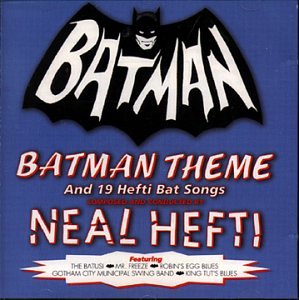
416R4P8FPFL

Composed by American jazz trumpeter, composer and arranger Neal Hefti, the Batman television theme featured “bass guitar, low brass and percussion to create a driving rhythm, while an eight-voice chorus sings ‘Batman!’ in harmony with the trumpets”, according to Jon Burlingame, author of TV’s Biggest Hits. Hefti began his professional career writing charts for Nat Towles, went on to play trumpet for Woody Herman and then a composer/arranger for Count Basie. He led his own bands as well, but chose to focus on scoring and conducting in the mid-fifties, where he found great success writing music for films such as Sex and the Single Girl, How to Murder Your Wife, Lord Love a Duck and Barefoot in the Park, among others. Besides creating the theme for the Batman series, he scored the film and television versions of The Odd Couple.

It’s no secret that Hefti’s classic television theme spawned a host of imitators and Caped Crusader-themed groups and albums during its heyday, such as “Batman and Robin – The Sensational Guitars of Dan & Dale”, and The Dynamic Batmen. Along with the Bat lunchboxes and posters and toy cars, it seems the theme music was licensed out just as freely to musicians looking to cash in on the Bat-craze. And with all due respect to the masterful Dark Knight scores of Danny Elfman and Hans Zimmer, it’s really the old TV tune that’s been re-recorded and re-interpreted over and over to this day. Here are some of our favorite renditions to close out this installment of BACKTRACKS.

Backtracks: J.D. Biersdorfer

BT-Logo-JG

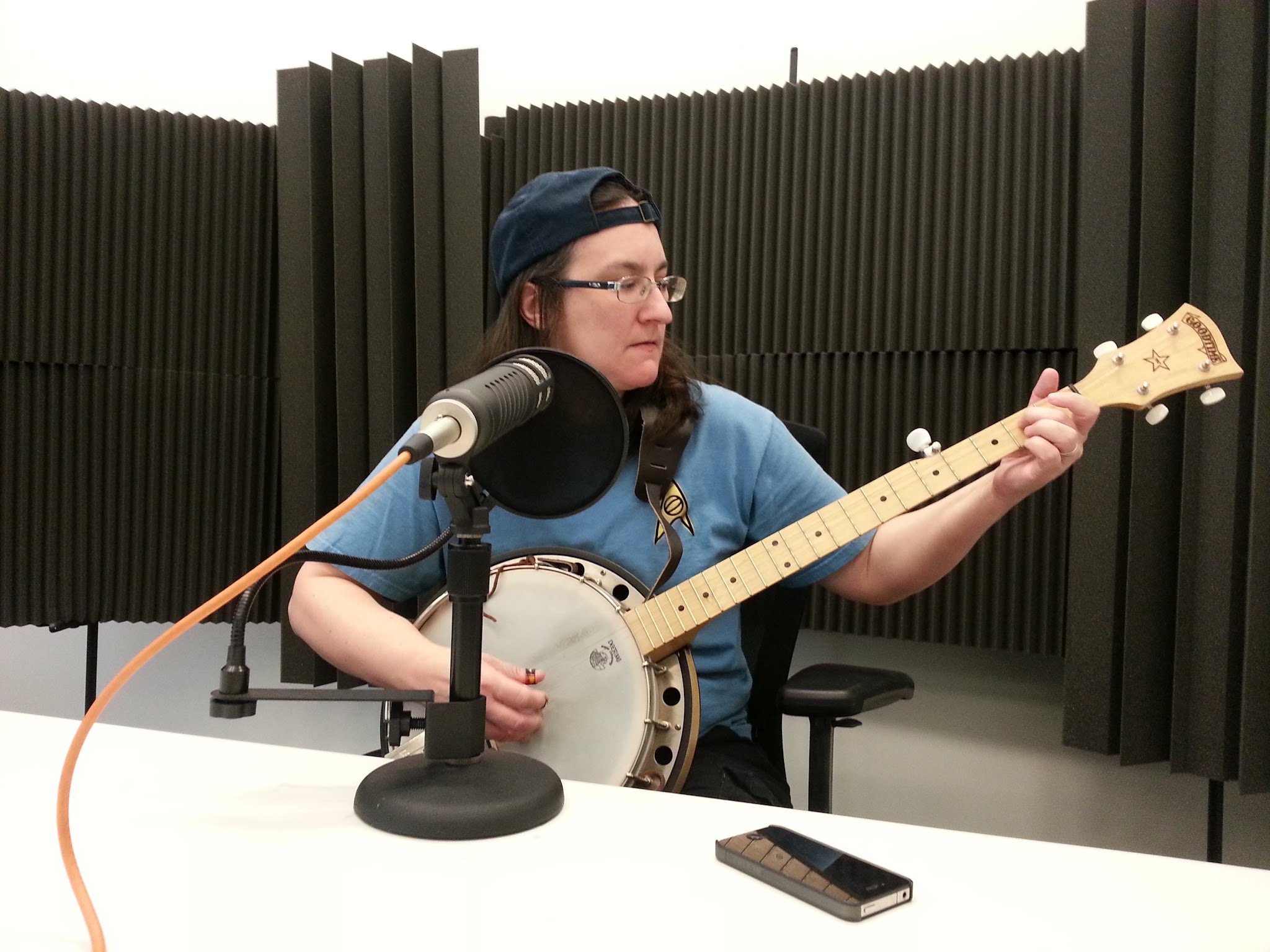
This time on BACKTRACKS, the thought of a grade-schooler rocking out to a bluegrass record is not quite the image of youthful rebellion we’ve become accustomed to.  For J.D. Biersdorfer, author, tech guru and co-host of the online radio show Pop Tech Jam, digging around in her parents’ record stacks took her on an unexpected journey through the music of the Appalachians.

Listen to her story here:

20120809_123906

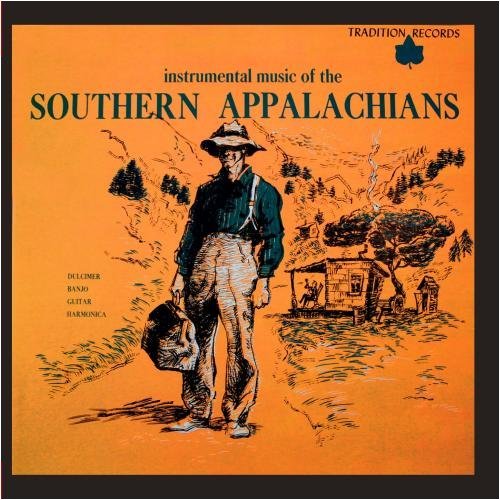
As J.D. tells it, the record which so captivated her was a collection of field recordings made by ethno-musicologist Diane Hamilton (daughter of the millionaire Harry Frank Guggenheim) during a trip to Virginia and North Carolina in 1956. The recordings were gathered into a 20-song collection called “Instrumental Music of the Southern Appalachians”.

instmusicofsouthappal_

Of the first song appearing on that album, a rendition of “Cripple Creek” by virtuoso banjoist and fiddler, Hobart Smith, J.D. says:

The history of the song is clouded as is the history of most of the Appalachian stuff. Cripple Creek I think is a place; I think it’s old country language for a crooked stream. There is a Cripple Creek in Virginia, there’s also one in Colorado and so there’s been this fight over which Cripple Creek the song is about. It’s got alternating lyrics, people make up their own words and they’re very tied to a certain region.

I forget the lyrics because they are so variable, but it’s basically, you’re going up to Cripple Creek and there’s a girl involved. In one version you roll up your pants and wade into Cripple Creek. If we go with the Appalachian background of it, a lot of those songs are very sad. In fact, my banjo teacher says the core of most Appalachian ballads is: you come home, everyone you know and love is dead; you come home and you make sure that everyone you know and love is dead; or you come home dead. “Cripple Creek” could fit in with that because with some of the versions that I’ve heard, something bad happens with the girl.

Steve Martin wrote this pretty famous essay to the banjo community about his history with the instrument and he has a whole paragraph about “Cripple Creek” – I play it all the time, you can play it slow, you can play it fast. Tony Trischka tells the story of Steve Martin’s essay when he’s on stage. Buffy Saint Marie does a version of it with a mouth bow, I think it was on Sesame Street. So it’s out there, even Etta Baker, the Piedmont guitarist who passed away not too long ago, had a nice slow rendition of it, and people didn’t know she played the banjo but she did.

So, with thanks to J.D. for picking away at the tune for us, and in honor of banjo legend Earl Scruggs, who passed away last year, we’ll leave off with Flatt and Scruggs’ version of the classic “Cripple Creek”.

BACKTRACKS: Thomas Holcomb

BT-Logo-JG

This time around on BACKTRACKS, newsroom developer and tech expert Thomas Holcomb tells us how a piece of music became his constant companion at a time when he felt cut off from the rest of his family and friends.

LISTEN to his story here:

Gato+Barbieri+gato_

It was the music of Argentinian saxophonist and composer Gato Barbieri that guided Thomas’ daily journey from darkness to light. Out of print until its reissue in 2007, Barbieri’s 1977 album Ruby Ruby was a romantic collection of Latin jazz compositions produced by Herb Alpert. The record moved from soothing balladry to energetic jams, driven by Barbieri’s warm-blooded sax melodies. The track Thomas talks about here featured guitar work by Lee Ritenour with drummer Steve Gadd and Brazilian percussionist Paulinho Da Costa.

Gato-Barbieri-Ruby-Ruby-(Reis)-(Rstr)-(Dig)

Here then is the full recording to keep you company as you head out into your day:

BACKTRACKS: Francis Mateo

On this third edition of BACKTRACKS, actor and poet Francis Mateo takes us back to his childhood in the Dominican Republic, where a Cuban love song inspires tears during a blackout, and an American pop song gets the kids scatting at a family party.

Listen to Francis here:

tumblr_m9nmlzWBkL1ru1w1ho1_1346474903_cover
The first song Francis discusses is “Veinte Anos” as performed by Omara Portuondo with The Buena Vista Social Club. Omara was the only female member of the ensemble. “Veinte Anos” is a Cuban form of the bolero-son, originally written by singer, guitarist and composer María Teresa Vera, whose career began in the early 1900s and spanned decades until her retirement in 1962. She was a renowned practitioner of Cuban roots music called trova, after the trovadores who traveled around earning a living by singing and playing guitar. Vera passed away in late 1965.

Here is a recording of Veinte Anos by Maria Teresa Vera, recorded around 1958:

Our BACKTRACKS guest, Francis Mateo remains inspired by both Latin and American music, especially when it comes to his writing:

Ten or fifteen years ago, I was hooked on Silvio Rodriguez, this Cuban singer songwriter. To listen to his voice, to listen to how he made these lines, these verses, it was really great for me. I have his whole collection. The thing is there are days when I just want to listen to Bach…but there are days when I just want to hear some lyrics. I like stories better, like Bob Dylan. I mean to me, Bob Dylan was amazing, and Bob Marley. Just the mood that it puts you in, that’s the main thing, this mood of opening yourself to the world and just receiving everything. And hopefully you can give something back. I’m a writer, and what I write is nothing compared to these people I mentioned. And yet, I can’t stop writing because it’s something that I need to do.

We’ll leave you with a sample of Francis Mateo performing his poetry:

Backtracks: Daniel Reyes Llinas

Just what WAS that first song or instrumental you heard at an early age, when you acknowledged music’s place in your life? Where were you and how did you hear it? That’s what we asked people for our new audio project, BACKTRACKS. We’re recording conversations and essays about our most formative musical memories.

First up, let’s meet composer, guitarist and media artist Daniel Reyes Llinas, who was lured away from singing in the choir to picking up his first axe by an Argentinian new wave pop song.

Listen to Daniel’s BACKTRACKS story here:

I’m from Bogota, Colombia. My family is made up of my mother, she was a TV soap opera actress. My biological father was a famous musician, he helped to create the Colombian music industry back in 1950s, 1960s. I never got to meet him, not that I know of. I have a step-father who’s my “love” father. That’s my origins.

It’s very common in Colombia to go to Catholic school, and when you go to Catholic school, you have to become part of the choir. I was six or seven, I had a very angelic voice. I don’t know, I had good intonation. That was my first approach to music. It was a priest named Ivan, the director of the choir…and he would bring us these pop songs, from Portuguese or Argentinian pop singers, and he will change the lyrics to praise God.

Then when you were in 5th grade…you get to play the guitar. They have a room with 50 guitars hanging on the walls. They will teach us how to hold the guitar, and they say, “This is the 6th string, this is E, everybody play E! ” Fifty kids playing E – chung, chung, chung! It sounded like bees or something.

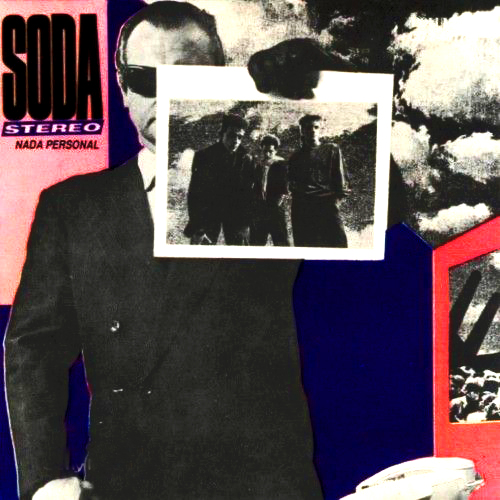
Soda_Stereo-Nada_Personal%5B1%5D

The song that Daniel discusses is called “Cuando pase el temblor” by the Argentinian band, Soda Stereo. The band was formed in the early 1980’s by guitarist/vocalist Gustavo Cerati, bass player Zeta Bosio, and drummer Charly Alberti. With a pop mixture of reggae, ska, new wave and noise rock, Soda Stereo was at the forefront of the Argentinian rock movement, and remained popular well into the 90s. After their farewell tour in 1997, they successfully reunited in 2007, three years before Gustavo Certi (now a prominent solo artist) suffered a stroke onstage in Venezuela. He remains in a coma to this day.

Daniel Reyes Llinas has a new album called Molino – listen to clips on his website: http://www.danielreyesllinas.com/

– Jocelyn

Tilting at Windchills: Make Music Winter REVIEW

Here’s a New York Times write-up of the Tilted Axes guitar parade, along with reviews of some of the other parades that were a part of Make Music Winter in NYC – Marching to Their Own Drummers:

‘TILTED AXES’

“I’ve lived in the neighborhood for 22 years and I’ve never seen anything like this,” a passerby said as Patrick Grant and his small platoon of electric guitarists and percussionists filed into St. Mark’s Church on East 10th Street. The musicians — roughly 20, with guitars plugged into miniature, battery-powered Danelectro amplifiers — had just finished a circuitous 85-minute journey from Rivington Guitars, on East Fourth Street, through the East Village, around Union Square Park, and on to the church, playing Mr. Grant’s insistently upbeat “Tilted Axes” as they walked.

The procession proved a fascinating barometer of New Yorkers’ tolerance for mild artistic eccentricity. Most people whose paths the ensemble crossed either smiled and stopped to watch, or scarcely glanced at the players, as if a parade of amplified guitarists was something you were likely to see at any time here.

A few happenstance listeners clapped to the rhythms of Mr. Grant’s piece — a series of simple, repeated chord progressions, to which a few players contributed spicy lead lines — and others joined the parade. No one seemed impatient or put out. And many a cellphone was drawn to document the performance.

Mr. Grant and his colleagues — among them, the guitarists Larry Simon, Angela Babin, Alex Baxter, Cristian Amigo and Nick Didkovsky — ended the piece inside the church after circling its auditorium a handful of times. They probably could have played for another 85 minutes, but on a signal from Mr. Grant, they produced a final, briskly strummed cathartic chord and settled in for what he called the “afterglow party.” – ALLAN KOZINN

For a brief glimpse of Tilted Axes, here’s video from along the parade route:

Make Music New York founder Aaron Friedman has said that Make Music Winter was inspired by Phil Kline‘s annual boombox parade Unsilent Night, which was performed this year on December 17. Kline’s piece Peregrine made its American debut at Make Music Winter, a musical procession which began at Grand Army Plaza in Brooklyn, and made its way through Park Slope to JJ Byrne Park.

Unsilent Night is a neighborhood institution here in the East Village, many I know have been a part of it at one time or another. I’ll end with a video profile of the yearly event from 2008 and thank Unsilent Night for being such a wonderful inspiration for the musicians who participated in Make Music Winter:

Jocelyn Gonzales

Make Music Winter Dec. 21, 2011 – Tilted Axes: Music for Mobile Electric Guitars

For the 1st annual Make Music Winter, notorious composer and producer Patrick Grant creates and leads a “precession” of over a dozen electric guitarists playing through Danelectro Honeytone mini-amps through the East Village, around Union Square, and back.

We are very happy to have NYC’s Rivington Guitars as a sponsor and the starting point for the precession and St. Mark’s Church-in-the-Bowery as another sponsor and as our final destination.

The public is invited to march along and bring light hand percussion to join in if they wish.

The result will be a moving, polyphonic sound cloud layered in compelling, electric rhythms all in honor of this season’s axial tilt.

The precession will begin at 6:30 PM at Rivington Guitars, 73 East 4th Street, between 2nd Ave. & Bowery, and will end at 7:30 PM at St. Mark’s Church-in-the-Bowery, 131 E 10th Street, NW corner of 2nd Ave.

Tilted Axes guitarists include: Cristian Amigo, Angela Babin, Alexander Baxter, Dan Cooper, Glenn Cornett, Nick Didkovsky, Toby Driver, Kurt Gottschalk, Randolph A. Hudson III, Taylor Levine, Joshua Lopes, James Moore, Gene Pritsker, Larry Simon, Geremy Schulick, and Patrick Grant.

More information and bios for all the participating guitarists can be found at the Make Music Winter 2011 website.