An audio-slideshow message from co-directors of Composers Concordance Records:
video editing: J. Gonzales – audio editing: P. Grant
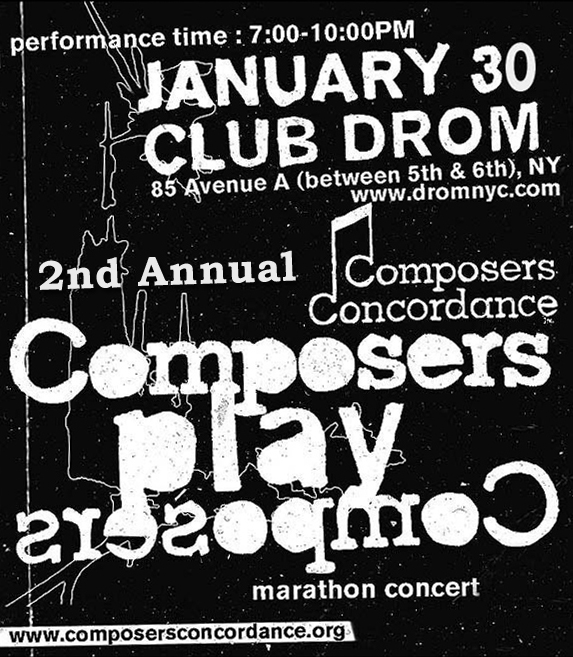
Composers Concordance’s 2nd Annual COMPOSERS PLAY COMPOSERS MARATHON January 30th at Club Drom, NYC
music & performances by:
Gene Pritsker, Dan Cooper, Patrick Grant, David Morneau, Robert Voisey, Kevin James, Peter Jarvis, Dave Taylor, John Clark, Jay Rozen, Hayes Greenfield, Valerie Coleman, Lynn Bechtold, Robert Dick, Franz Hackl, Milica Paranosic, Arthur Kampela, David Claman
CLUB DROM
85 Avenue A
(b/w 5th & 6th)
New York, NY
(212) 777-1157 http://www.dromnyc.com
“Antônio Carlos Brasileiro de Almeida Jobim (January 25, 1927 in Rio de Janeiro – December 8, 1994 in New York), also known as Tom Jobim, was a Brazilian songwriter, composer, arranger, singer, and pianist/guitarist. A primary force behind the creation of the bossa nova style, his songs have been performed by many singers and instrumentalists within Brazil and internationally.”
Tom Jobim: b. 1927 Rio de Janeiro – d. 1994 New York
So goes the WIKI. Happy Birthday, Tom.
I can’t say that I’ve ever been a Bossa Nova fan per se but the more I hear it the deeper my respect grows. Not surprisingly, it grew by leaps and bounds in recent years while working in Brazil. Something about actually being there and taking in that vibe. I’m sure that’s a quite common effect when we travel to a place where any art originates.
This year, to celebrate Jobim’s anniversary on January 25, the radio station WKCR 89.9 FM in New York City is having an all-day on-air festival of his life and music. As part of that series of events, NYC-based composer Arthur Kampela, himself a native of São Paulo, Brazil, put together a group of composers to create recorded arrangements of Jobim’s music. That airs at 8 PM (01:00 GMT) and is able to be heard via streaming on the internet through the station’s web site.
Amongst the composers that Arthur put together to create arrangements were: himself, Clarice Assad, Gene Pritsker, Dan Cooper, myself, and most likely a few more that I won’t know about until I hear the broadcast. When the email went out, Arthur had a list of the composers and included suggestions of pieces we might want to work with. Like I said, not being the biggest Bossa Nova fan, and, the more famous pieces already having been doled out (The Girl from Impanema et al), I had to YouTube the suggestions I was given. I listened to them. Hmm…I wasn’t particularly inspired, despite the fine pieces that they are. Scrolling through a list of Jobim compositions, One Note Samba (Samba De Uma Nota So) caught my eye. With nothing more than the title (one note? I can handle that!) I listened to the original once (OK, I had heard it before I realized) and set to work.
Having no interest in trying to beat the Brazilians at their own game, I had to choose an approach that would be respectful yet unique enough to be worth the effort. I started thinking: how many things do we hear every day that push one note “melodies” at us? I made a short list to get started and then began collecting samples, tuning them all to the same pitch and beat mapping them into the same tempo.
The result was a new piece I call One Note Sampla for Tom Jobim. You can listen to the original here.
Busy Signals in D#m7
“One Note Sampla for Tom Jobim” by Patrick Grant
If you tune in and want to follow along, here’s a list of sounds that one can hear when listening to the piece:
1. A chorus of touch tone phones, from dial tone to keypad to busy signals. The busy signals build up into the first chord of the song (D#m7) in patterns of 2s, 3s, and 4s. A chromatic electric guitar duet is accompanied by strings and timpani as a drum loop of junkyard metal establishes the down beat.
2. A garbage truck alarm sounds as it backs up, left to right, with strings playing the harmonies of a slowed down chorus.
3. Submarine SONAR pings with added dripping water FX. Dripping water in a submarine? Not good.
4. Cells phones ringing and the door chimes of a NYC subway car. Going somewhere.
5. Bells and anvils clang during a double-time jazz version of the chorus.
6. More cell phones ringing with different model car horns playing the one note melody in the distance. Brazilian traffic jam?
7. A heart monitor and respirator. After a gasp, the monitor goes flatline. An international vehicle siren is heard following the descending chromatic harmony of the piece, mimicking a Doppler effect.
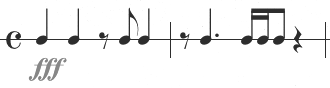
8. A rock band kicks in. Under the jangly guitars, an orchestral cresendo from Alban Berg’s expressionist opera Wozzeck is heard. This comes from the end of Act Two Scene Two of the opera, Variations on a Single Note. At the end you can hear the timpani play the dominant rhythmic motive from Berg’s piece:
The dominant rhythmic motive from Wozzeck
9. One last chorus. The guitars are now in canon, one beat behind the other.
10. Two guitars battle out the last instance of the one-note melody. The orchestra swells on that one note again until…
I met Sig Rosen at the Composers Concordance Records label launch party at St. Marks Church in The East Village late last autumn. He’s known those folks for a while, especially in this case, because vocalist Patricia Sonego had just performed my “Thou Art Translated (Knot)” with me and dancer Megan Sipe at the event.
Things being as they are these days, we became friends on Facebook and, noting his interests on his info page, I saw that Medieval and Renaissance vocal music was one of his passions. His interest stems back to the Renaissance Chorus of New York, a group founded by Harold Brown in the early 1950s.
I decided to send him a link to my site which houses a 20 minute vocal suite I created in 2008 as a commission from medieval music enthusiast (and the work’s librettist) Bruce Barrett, my (uncharacteristic) “Three Choral Pieces in Latin.”
From here, Sig told me all about the vocal groups and overlapping subsets that he has been a part of for years. He asked, would I be interested in having one of these groups, the Friday Night Singers (led by Marge Naughton), do a reading of these pieces I wrote? Of course I would!
Normally, they meet uptown but, due to seasonal flu, the owner of that loft could not do it on January 14, the night we set up. Instead, we met in Chelsea at the loft of John Hetland, director of the Renaissance Street Singers, who was gracious to let us all meet there and sing through not only my pieces, but also a few of his great choral transcriptions of which he has created volumes.
This audio slideshow is a bit of conversation with Sig Rosen from that night:
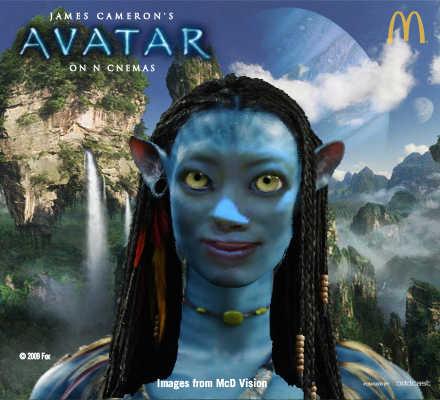
If you’re like me, winter means some long nights kicking back and catching up on some movies. But I’m not really an Avatar kind of nerd, so no flying blue people in my disc player please.
But I do love movies about music. I have a small collection of rockumentaries and musical biopics on my DVD shelf, because I love finding out about different genres and the cultures that gave birth to them; I’m enthralled by the rise and fall of famous (and not so famous) rock bands; I puzzle over the meticulous creation of old and new technologies; I’m intrigued by forgotten geniuses; and always mystified by the highly individual, yet intensely collaborative process of making music.
Usually I can’t find that many kinds of music films in the local theaters or video stores, so I turn to the magic of the internet. If you’ve exhausted your instant play queue on Netflix, try this site called SNAG FILMS, which hosts and streams a decent library of documentary films on its site.
They have a section dedicated to music docs RIGHT HERE, which includes Sundance winner, Dig!, “a classic story of rock ‘n’ roll genius and self-destruction”; a film about the turbulent life story of cult musician Townes Van Zant called Be Here to Love Me; and another movie called Off the Charts: The Song Poem Story, in which ordinary folks send their funny and weird poems to companies who will set them to music.
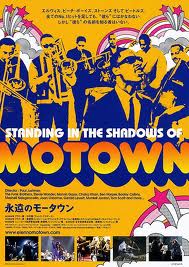
Here are some other music docs I’ve seen recently, which might inspire you to fire up Pandora (not the Avatar planet!) and turn your speakers up to 11.
1. Who is Harry Nilsson and Why is Everybody Talking About Him? – “A wildly entertaining, star-studded documentary about The Beatles’s favorite American musician, WHO IS HARRY NILSSON (AND WHY IS EVERYBODY TALKIN’ ABOUT HIM)? is a vibrant and definitive portrait of one of the most talented singer-songwriters in pop music history.”
2. I Bring What I Love – “Shot over two years and across three continents. Following the Grammy-winning African icon as he releases his album, EGYPT, a best-selling record in which, for the first time, Ndour sings about Islam. Upon release in Senegal, the album was considered blasphemous, bringing Ndour, perhaps the most popular Muslim artist in the world, face to face with the contradictions of his own religion.”
3. Glass: A Portrait of Philip in 12 Parts– “For 18 months award-winning director Scott Hicks followed the legendary composer Philip Glass across three continents, creating a remarkable portrait of one of the greatest artists of all time.”
4. Note by Note: The Making of Steinway #L1037– “Note By Note” is a feature-length independent documentary that follows the creation of a Steinway concert grand, #L1037— from forest floor to concert hall. It explores the relationship between musician and instrument, chronicles the manufacturing process, and illustrates what makes each Steinway unique in this age of mass production.”
5. Touch the Sound – “Evelyn Glennie is a Grammy-winning classical percussionist whose solo work is unrivalled. She is also profoundly deaf. For Evelyn, sound is palpable and rhythm is the basis of everything. Without vibration, there is nothing. From silence to music, sound is felt through every sense in our bodies.”



 The MMiXdown