
Sandwiched between all the flavors of electronic music in my tune bank, the iconic theme music for the BBC’s Doctor Who TV series never fails to pop up on ye olde iPod shuffle…
With that killer bass riff, the eerily majestic melody line and the sci-fi whooshes puncuating the piece, the music’s sonic vision of the future seemed so bleak and mysterious. Yet as dark-sounding as it was, there was also something dashing and whimsical about it, like Dr. Who himself.
Composed by Ron Grainer (The Prisoner, The Omega Man) and realized by Delia Derbyshire for the BBC Radiophonic Workshop in 1963, this was one of the first electronic themes created for a series. In my humble opinion, even after 40 years and several Dr. Who series reboots, it continues to be one of the most striking and recognizable electronic themes in TV history (another would be the gothic theremin melody from ABC’s Dark Shadows 1966-1971).
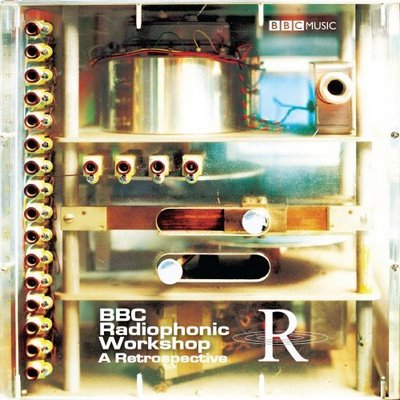
Active from 1958-1998, the BBC Radiophonic Workshop was originally commissioned to create sound effects for radio, but moved into soundscapes and music for television. But back in the 60s, there was no endless array of synthesizers and software sequencers that could easily produce new sounds. So the composers and audio technologists of the BBC Radiophonic workshop captured environmental sounds by hitting weird objects, speaking/breathing into mics, recording the strange noises of machinery. They composed music with tape loops and countless splices, stretching the tape, slowing it down, pitching it up. They found ingenious ways of manipulating open reel machines and playing with oscillators or circuits. They created so many unusual scores for BBC programing at the time, from educational programs to ID’s to dramatic series. It was music no one had ever heard before.

Among the members of the Radiophonic Workshop, it’s Delia Derbyshire in particular who’s been called the “unsung heroine of British electronic music” by the Guardian newspaper. Her genius for manipulating natural sound to make music has inspired a rabid cult following. The Dr. Who theme made her famous, but Delia composed astonishing scores for BBC television, theater and early electronic music performances. She was much admired for her enthusiasm, her intellect and her singular understanding of composition, mathematics and audio technology. Here is a video of Delia demonstrating some her technique:
In addition to her BBC work, there were extra-curricular collaborations with composers like Sir Peter Maxwell Davies or Roberto Gerhard, and passing creative dalliances with pop figures such as Anthony Newley, George Martin, and Harry Nilsson. She basically withdrew from music in the seventies, but in her later years, she began to get interested in electronic music again, when a younger generation of artists like Aphex Twin and The Chemical Brothers name-checked her as an influence. As noted in her obituary in the Guardian, “The technology she had left behind was finally catching up with her vision.” She passed away in 2001.
Here is one of Delia’s compositions called “Time to Go”, hosted by radio station WFMU:
Now, Delian fans old and new have another opportunity to find out more about their musical heroine and the BBC Radiophonic Workshop. Director Kara Blake profiles Delia in a new documentary film called “The Delian Mode”, which was screened at the Unsound Festival in NY last month.
“The Delian Mode” goes on to screenings in Glasgow, Montreal and London. But for a more complete overview of the work of all of the BBC Radiophonic engineers and composers, the BBC produced a 2006 documentary about the Workshop’s heyday, which you can find in several parts on YouTube:



 The MMiXdown